
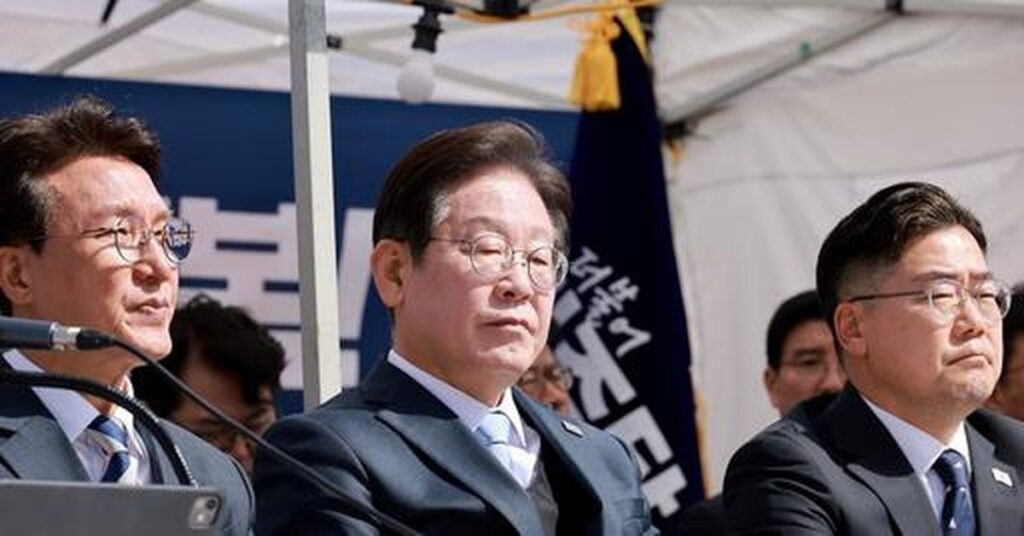
On April 4, 2025, Lee Jae-myung, the leader of South Korea’s main opposition party, the Democratic Party of Korea, made a significant statement at the National Assembly following the Constitutional Court’s decision to impeach President Yoon Suk-yeol. In his remarks, Lee proclaimed that the “great people have reclaimed the great democratic republic of Korea,” marking a pivotal moment in the nation’s political landscape.
Lee expressed heartfelt respect and gratitude to the citizens who defended the democratic values of the Republic of Korea. He emphasized the gravity of the situation, noting that the impeachment of a sitting president is a rare occurrence, with Yoon being only the second president in South Korean history to face such a fate, following former President Park Geun-hye. Lee described this event as a “tragedy in the constitutional history of South Korea” and called for deep reflection and responsibility from the entire political community.
In his address, he urged that politics must strive to become a beacon of hope for the people and the nation, ensuring that the tragedy of constitutional disruption does not recur. “We must do our utmost to ensure that our politics can be a hope for the people and the nation,” Lee stated, underscoring the need for accountability and reform.
This impeachment comes in the wake of a series of political crises that have plagued Yoon’s administration. On December 3, 2024, Yoon declared a state of “extraordinary alert,” asserting that the opposition-majority parliament was paralyzing the administration. This declaration was met with widespread criticism and accusations of overreach, as it involved the temporary deployment of military troops to the National Assembly.
The National Assembly, on January 14, 2025, approved an impeachment motion against Yoon, arguing that his actions violated the constitution. The Constitutional Court’s ruling on April 4 confirmed the impeachment, leading to Yoon’s immediate removal from office. This decision has ignited discussions about the future direction of South Korean politics, particularly in the context of the upcoming presidential election.
Lee Jae-myung, who is seen as a strong candidate for the next presidential election scheduled within 60 days, is currently leading in opinion polls. According to a Gallup survey released on the same day, he holds a support rate of 34%, positioning him favorably against potential opponents. His rise in popularity is attributed to his leadership during the impeachment proceedings and his ability to resonate with the electorate’s desire for change.
In a recent press conference, Lee criticized Yoon’s declaration of extraordinary alert, describing it as a means to intimidate the public and undermine democracy. He stated, “The declaration was a threat to the people and democracy, using power and weapons to impose control.” His remarks reflect a broader sentiment among opposition leaders who view Yoon’s presidency as a departure from democratic norms.
Moreover, Lee has faced his own legal challenges, having been involved in several criminal trials. However, he recently received a reversed acquittal in an appeal related to violations of the Public Official Election Act, which has alleviated some of the pressures he faced heading into the election.
In light of these developments, stocks associated with Lee Jae-myung have surged. On April 4, shares of Orient Precision, a company linked to Lee, rose by 9.20% following the impeachment announcement. This trend is seen as indicative of investor confidence in Lee’s potential as a future leader, as he has previously declared his presidential candidacy at the company’s clock factory, where he worked as a youth.
Other stocks related to Lee, such as Orient Bio and Tongsin Construction, also saw significant gains, reflecting a broader optimism among investors regarding the Democratic Party’s prospects. The political landscape in South Korea is shifting, with the opposition party gaining momentum amid increasing discontent with the ruling party.
As the political climate evolves, the implications of Yoon’s impeachment extend beyond domestic politics. Analysts suggest that the change in leadership could affect South Korea’s relations with Japan, particularly as Lee Jae-myung’s left-leaning stance may lead to a re-evaluation of diplomatic ties.
Lee’s vision for South Korea includes a commitment to safety and peace, where all citizens can live with hope and contribute to a nation that fosters growth and development. He has articulated a desire to ensure that the mistakes of the past are not repeated, particularly in relation to state violence and the historical injustices of the Jeju Island 4.3 Incident and the Gwangju Democratization Movement.
In his statements, Lee has underscored the importance of accountability for past state violence, asserting that those responsible must face consequences regardless of how much time has passed. He criticized the acting president for vetoing the “Special Act on National Crime Statute of Limitations,” which aimed to address historical injustices, arguing that such actions protect those who have committed state violence.
As South Korea stands at a crossroads, the impeachment of President Yoon Suk-yeol marks a critical juncture in the nation’s democratic journey. The upcoming presidential election will not only determine the future leadership of the country but will also shape the political discourse surrounding democracy, accountability, and the rule of law.
With the Democratic Party poised to capitalize on its current momentum, the political landscape remains fluid, and the voices of the electorate will play a crucial role in shaping the future of South Korea.