
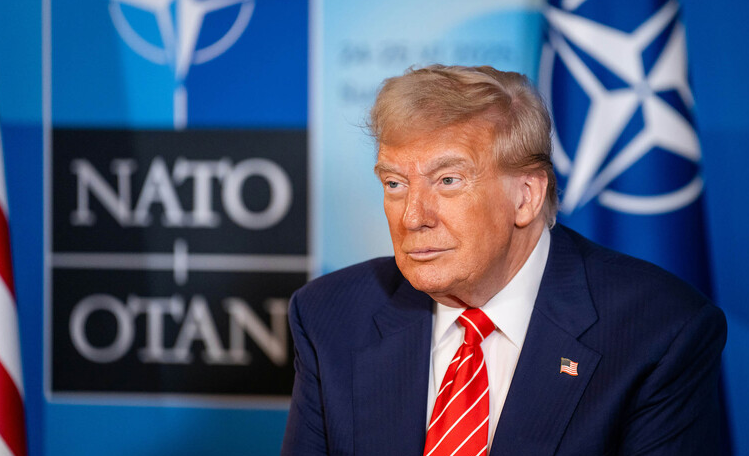
An internal Pentagon email sparks debate over NATO’s role in the Iran war and European allies.
WASHINGTON, 24 April (Reuters) — An internal Pentagon email has outlined options for the United States to penalise NATO allies deemed unsupportive of US operations in the war with Iran, including suspending Spain from the alliance and reviewing Washington’s position on the UK’s claim to the Falkland Islands.
The disclosure was made by a US official to Reuters. The policy options were detailed in a memo prepared by Elbridge Colby, the Pentagon’s top policy adviser, which expressed frustration over the reluctance or refusal of some allies to provide access, basing and overflight rights—known as ABO—for the Iran campaign, according to the official, who requested anonymity.
Colby wrote that ABO constituted the “absolute minimum threshold for NATO”, the official said, adding that the options were circulating at senior levels within the Pentagon.
“One option in the email envisages the suspension of ‘difficult’ countries from key or prestigious positions within NATO,” the official said.
US President Donald Trump has sharply criticised NATO allies for not deploying their navies to help reopen the Strait of Hormuz, which has been closed to global shipping following the outbreak of the air war on 28 February.
He has also indicated he is considering withdrawing from the alliance.
“Wouldn’t you do that if you were me?” Trump told Reuters in an interview on 1 April, when asked about the possibility of the US leaving NATO.
However, the email does not recommend such a move, the official said. Nor does it propose closing US bases in Europe.
The official declined to say whether the options include a reduction of US troop levels in Europe, which many expect may occur.
Asked to comment on the email, Pentagon spokesperson Kingsley Wilson said: “As President Trump has stated, despite everything the United States has done for our NATO allies, they have not been there for us.”
“The Department of War will ensure the President has credible options to ensure our allies are no longer paper tigers, but truly do their part. We have no further comment on these internal deliberations,” Wilson added.
When asked whether suspending a NATO member is possible, a North Atlantic Treaty Organization official said the alliance’s founding treaty does not provide for any mechanism to suspend membership.
Future of the alliance
The US–Israel war with Iran has raised serious questions about the future of the 76-year-old alliance and sparked unprecedented concerns that the US may not come to the aid of European allies if they were attacked, according to analysts and diplomats.
The UK, France and others have said that joining a US naval blockade would amount to entering the war, but they are willing to help keep the Strait of Hormuz open after a permanent ceasefire or once the conflict ends.
However, officials in the Trump administration insist NATO must not be one-sided.
They have expressed frustration with Spain, whose socialist government has said it will not allow its bases or airspace to be used to strike Iran. The US maintains two key military installations in Spain: Naval Station Rota and Morón Air Base.
The policy options outlined in the email are intended to send a strong signal to NATO allies with the aim of “reducing a sense of entitlement on the European side,” the official said.
The option of suspending Spain from the alliance would have limited operational impact on US military activities but significant symbolic consequences, according to the email.
The official did not explain how the US could follow through on such a suspension.
“We do not work on the basis of emails. We work on official documents and government positions, in this case those of the United States,” Spanish Prime Minister Pedro Sánchez said when asked for comment ahead of a European Union leaders’ meeting in Cyprus.
Falklands stance
The memo also included an option to reconsider US diplomatic support for long-standing European “colonial holdings”, such as the Falkland Islands near Argentina.
The US State Department website states that the islands are administered by the UK but remain claimed by Argentina, whose president, Javier Milei, is an ally of Trump.
Milei struck an optimistic tone.
“We are making every human effort to ensure that the Malvinas—those islands, the entire territory—return to Argentine hands,” Milei said in a radio interview he later posted on X.
“We are making progress like never before.”
The UK and Argentina fought a brief war in 1982 over the islands after Argentina attempted to seize them. Around 650 Argentine soldiers and 255 British troops were killed before Argentina surrendered.
A spokesperson for UK Prime Minister Keir Starmer said sovereignty over the islands rests with the UK.
“Sovereignty lies with the United Kingdom, and the right to self-determination of the islanders is paramount. That is our consistent position and will remain so,” the spokesperson said.
Trump has previously mocked Starmer, calling him weak for not joining the US war with Iran, saying he was “not Winston Churchill”, and referring to British aircraft carriers as “toys”.
The UK initially refused a US request to use British air bases to strike Iran, but later approved defensive missions to protect citizens in the region, including British nationals, amid Iranian retaliation.
Defence Secretary Pete Hegseth said at the Pentagon that “a lot has been revealed” by the war with Iran, noting that Iran’s long-range missiles cannot reach the US but can reach Europe.
“We received questions, obstacles or hesitation… You do not have a strong alliance if countries are unwilling to stand with you when you need them,” Hegseth said. (YS/ZH)
as a preferred source on Google