

解体工事が進められていた「旧香川県立体育館」が、保存活用に向けての“最後のチャンス”を迎えています(詳細はこちらの記事を→https://bunganet.tokyo/kagawastop/)。この機に、BUNGA NETでは緊急連載「旧香川県立体育館に思う──アーキテクトボイス50」を行います(発起人:田根剛、佐々木睦朗、北山恒、宮沢洋)。34人目は建築家の伊藤博之氏です。(ここまでBUNGA NET編集部)
県庁と対のアートとして
建築家達が保存のために考え提案してきたことと、香川県の判断との溝を埋めるのは難しいかもしれないし、このタイミングで何を書くべきだろうか。
土地や対象との何らかの縁がないと意見しにくく、丹下作品であるがゆえ専門家でさえ自由な物言いがしづらい、皆のためらいや慎みが解体着手に至ってしまった原因の一つかもしれず、重く受け止めている。
学生の頃、初めて訪れた旧香川県立体育館にはすでに色が塗られ、コンクリート打ち放しのままの姿を知らず、丹下作品としては異質に映った。土の色の側面の丸い穴や存在感のある足から素焼きの埴輪の古代船のようにも見え、子どもたちに親しまれる形象を古墳時代にまで探ったのかと思っていた。元々構造と日本刀の反りを重ねた意匠であったなら、鋭さや怪しさを削いだ色づけを残念に感じている。
旧体育館は、香川県庁舎のような日本建築の解釈にとどまらない、根源的な力強さがある。遺跡が多く、古戦場もある高松で、船のような、刀のような建築が代々木体育館と同じ構造技術で実現されている。端正な県庁舎とのびやかな体育館、どちらもを生み育てた建築家と香川県の気概を感じる。
私が建築を学びだした頃、街では新都庁の建設反対の署名が集められ、巨大な聖堂を模すための巨費が問題視されていた。当時はまだ、時間と技術を建築として残す現代での意義について意識的ではなかったし、代々木体育館を凌ぐ建築が生まれない未来も見えていなかった。巨なるものから距離をとるような空気感のなか私は学び、奈良の町家の増改築を調査したりしていた。
始まりも終わりもわからない建築がいい、と私は思っている。過去や地形と紐づきつくられ、変化しながら上書され続け、記憶や風景としてうつろい残るものに惹かれてきた。いつからか、現代建築の時間性も、同様に受け止めている。建築の重みは、想像され、生かされる時間の長さだ。塗られた旧体育館の今の姿も悪くはない。
平和記念資料館や代々木体育館の保存が確かになり、香川県庁舎も大切に使われ、現代建築の継承への理解は高まっている。県庁舎と旧県立体育館は、両方の建築をそろえて、後世に残すのが望ましい。これからのさらなる時間は、建築の価値を確実に増してゆく。
旧体育館は、外観だけでも香川アートとしての価値がある。芸術で瀬戸内の輝きを世界に届けている香川県だからこそ、まずオブジェとして残してはどうか。もちろん安全が最優先で、費用負担を残す責任は重い。海風で傷みながら放置され過ぎてもいる。しかし中に入らずフェンスの外から見せるなら、耐震補強の考え方にも選択肢が増えるだろうし、使わないのだからサポートを入れるなど安価な方法でよいかもしれない。時間のかかる再生は後回しでいい。どんな形であれ、建築にこめられ、それが生きた時間をつなげてほしい。
伊藤博之/建築家、伊藤博之建築設計事務所、工学院大学教授
プロフィルはこちら→http://ito-a.jp/?page=profile
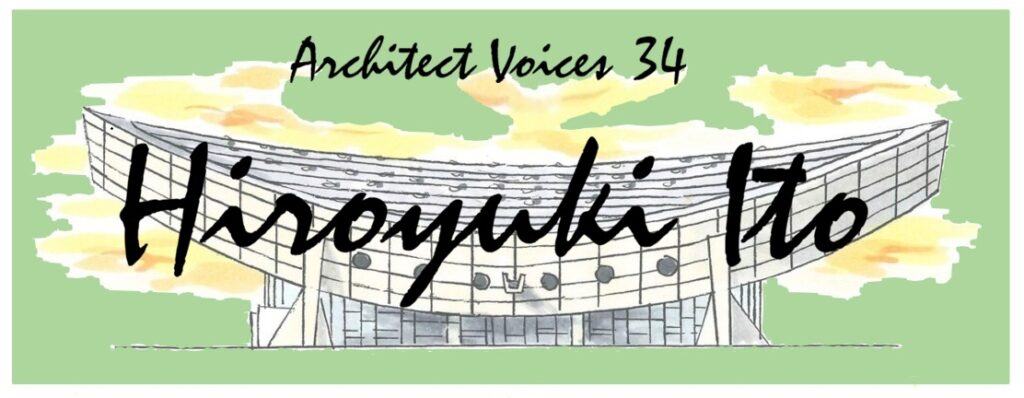
 閉館間際の旧香川県立体育館。2014年撮影(写真:宮沢洋)
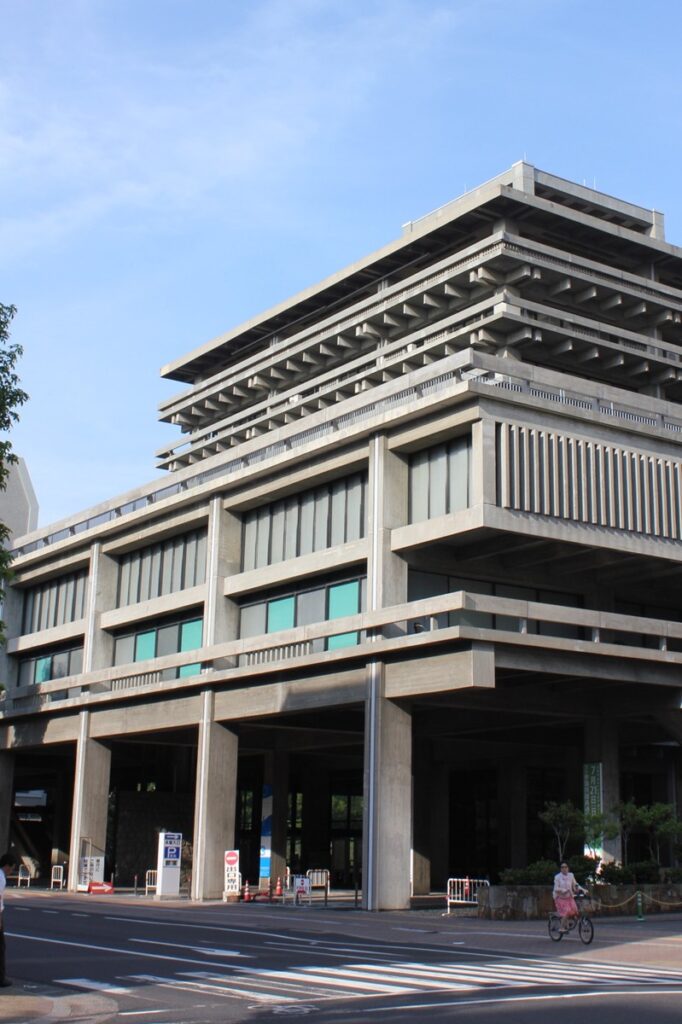 香川県庁舎(写真:宮沢洋)
As a Work of Art in Dialogue with the Prefectural Government Office
It may be difficult to bridge the gap between what architects have considered and proposed for the preservation of the building and the decisions made by Kagawa Prefecture. At this point, I find myself wondering what I should write.
Unless one has some personal connection to the land or the subject, it can be difficult to speak out. And because this is a work by Kenzo Tange, even experts may find it difficult to speak freely. I cannot help but feel that this collective hesitation and restraint may have been one of the reasons the demolition ultimately began. I take that very seriously.
When I first visited the former Kagawa Prefectural Gymnasium as a student, it had already been painted. I had never seen it in its original exposed-concrete state, and as a work by Tange, it struck me as somewhat unusual. With its earth-colored sides, circular openings, and substantial feet, it even reminded me of an ancient boat-shaped haniwa figure made of unglazed clay. I wondered whether its form had reached all the way back to the Kofun period to create an image that would be familiar and appealing to children. If the original design was indeed based on the building’s structural system and the curve of a Japanese sword, I regret that the paint has diminished some of its sharpness and sense of mystery.
The former gymnasium possesses a fundamental strength that goes beyond the interpretation of Japanese architecture seen in the Kagawa Prefectural Government Office. Takamatsu is a city rich in archaeological sites and former battlefields, and here stands a building that evokes both a ship and a sword, realized through the same structural technology as Yoyogi National Gymnasium. The dignified government office and the expansive, free-flowing gymnasium together express the vision and determination of the architect and Kagawa Prefecture that brought both buildings into being.
When I began studying architecture, people in Tokyo were collecting signatures opposing the construction of the new Tokyo Metropolitan Government Building, while its enormous cost, intended to create something resembling a gigantic cathedral, was being questioned. At the time, I was not yet consciously aware of the significance, in our own era, of leaving time and technology behind in the form of architecture. Nor could I foresee a future in which buildings capable of surpassing Yoyogi Gymnasium would no longer be created. I studied architecture in an atmosphere that seemed to be moving away from monumental things, researching, among other subjects, the additions and alterations made to traditional machiya townhouses in Nara.
I believe architecture is best when it is impossible to tell exactly where it began or where it will end. I have always been drawn to things that are rooted in their history and terrain, continually rewritten and transformed, and that remain as shifting memories and landscapes. At some point, I came to view the passage of time in contemporary architecture in much the same way. The weight of architecture lies in the length of time for which it can be imagined and kept alive. There is nothing inherently wrong with the former gymnasium as it stands today, painted as it is.
The preservation of the Hiroshima Peace Memorial Museum and Yoyogi Gymnasium has become increasingly secure, while the Kagawa Prefectural Government Office continues to be carefully used. Understanding of the importance of passing modern architecture on to future generations is growing. Ideally, the prefectural government office and the former prefectural gymnasium should be preserved together, as a pair. The passage of more time will only increase their architectural value.
The former gymnasium has value as a work of Kagawa art even if we consider only its exterior. Precisely because Kagawa Prefecture has sought to share the brilliance of the Seto Inland Sea with the world through art, why not preserve it first simply as an object? Of course, safety must come first, and it would be a serious responsibility to leave future generations with the burden of maintaining the building. It has also been exposed to the sea air and left to deteriorate for far too long.
But if people were not allowed inside and the building were viewed from outside the fence, there might be more options for seismic reinforcement. Since it would not be used, perhaps a less expensive approach, such as adding structural supports, would be sufficient. The more time-consuming process of fully restoring and revitalizing the building could come later.
Whatever form it takes, I hope we can preserve the time invested in this architecture—and, above all, connect it to the time during which it has been alive.
Hiroyuki Ito/Architect; Ito Hiroyuki Architectural Design Office; Professor, Kogakuin University
一覧ページはこちら↓
