
Africa emerges as an alternative oil supply source amid the Strait of Hormuz crisis.
JAKARTA – Indonesia is expanding its sources of crude oil supply from Africa to reduce the risk of energy shortages arising from tensions around the Strait of Hormuz.
Citing Antara News, Deputy Foreign Minister Arif Havas Oegroseno said the government is seeking oil supply sources from regions that do not depend on shipping routes through the Strait of Hormuz.
“We are currently working closely with Algeria, Nigeria, Angola and several other African countries,” Havas said after a working meeting with Commission I of the House of Representatives in Jakarta on Thursday.
According to him, Africa is a potentially important alternative source of crude oil because shipments from the region do not pass through the Strait of Hormuz.
“We have already received substantial oil supplies from Africa. So far, there have been no issues,” he said.
In addition to Africa, Indonesia is also exploring opportunities to import oil from Latin America, which has considerable oil and gas reserves.
“We see many countries in the region with oil and gas potential. Almost every country in Latin America has such potential,” Havas said.
Earlier in April, PT Pertamina (Persero) stated that Africa had become one of Indonesia’s alternative sources of crude oil supply amid rising tensions in the Middle East.
The move is in line with directives from Energy and Mineral Resources Minister Bahlil Lahadalia to secure alternative crude oil supplies while the Strait of Hormuz remains affected by regional tensions.
Pertamina also said it would continue efforts to ensure the availability of fuel and liquefied petroleum gas (LPG) for both household and industrial needs.
Efforts to diversify energy supplies are being undertaken amid growing tensions in the Persian Gulf following an escalation in the conflict involving Iran, the United States and Israel.
The Strait of Hormuz is one of the world’s busiest energy shipping routes and serves as a critical corridor for global crude oil and liquefied natural gas (LNG) trade.
The Indonesian government continues to assess the potential impact on national energy security, given that around 20%-25% of the country’s crude oil imports are transported through the route.
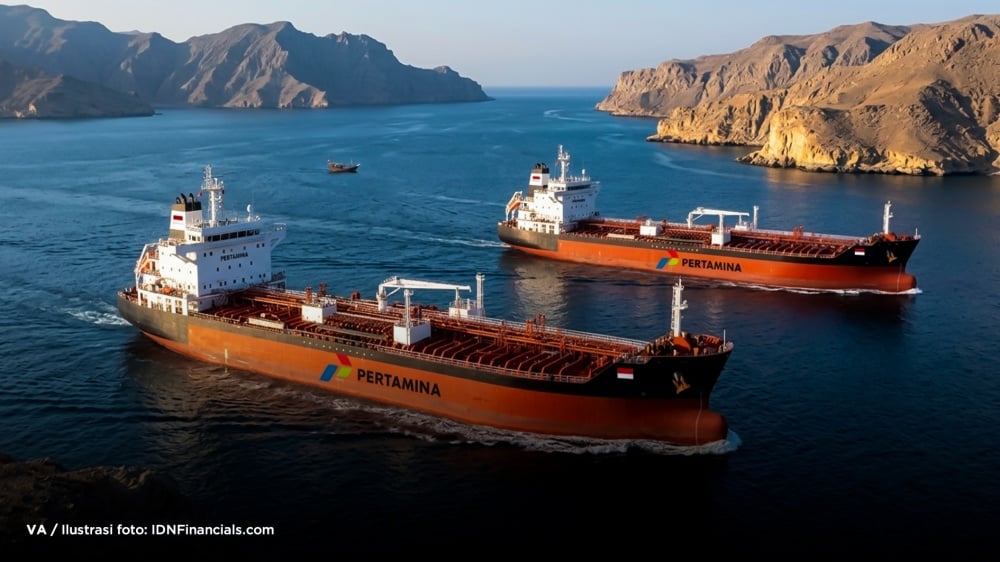
The urgency of securing alternative supplies has increased following reports that two tankers operated by Pertamina International Shipping (PIS) remain stranded in the Arabian Gulf and have yet to pass through the Strait of Hormuz. (ARF/ZH)
as a preferred source on Google