
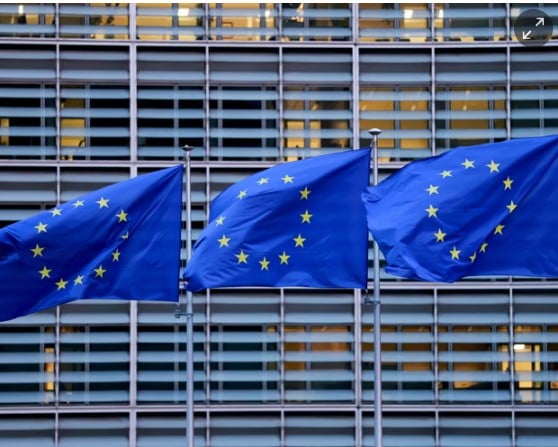
EU requires industries to diversify suppliers in bid to reduce China’s dominance in supply chain.
JAKARTA – The European Union is preparing new regulations aimed at reducing industrial dependence on China by requiring companies to source critical components from at least three different suppliers.
As reported by Reuters, the Financial Times said the rules would target strategic sectors such as chemicals and industrial machinery.
Under the proposed framework, companies would be limited to sourcing only around 30–40% of components from a single supplier, with the remainder required to come from at least three different suppliers that are not based in the same country.
The move comes amid growing concerns within the European Union over China’s dominance of global critical mineral supply chains.
Beijing is seen as leveraging its position in the processing of strategic minerals to influence global markets, including through export restrictions and price pressure.
These minerals are key inputs for industries ranging from semiconductors and electric vehicles to advanced weapons systems.
The Financial Times also reported that European Union trade commissioner Maroš Šefčovič is preparing additional tariffs on chemical and machinery products from China.
The policy is intended to reduce the European Union’s trade deficit with China, which has reached EUR 1 billion per day, while protecting European industries from what Brussels views as Beijing’s “weaponisation of trade”.
Last month, Šefčovič signed a memorandum of understanding with US Secretary of State Marco Rubio on co-operation in the production and security of critical mineral supplies.
The agreement forms part of broader efforts by Western countries to reduce China’s dominance over raw materials essential to advanced manufacturing industries.
The European Commission has not yet issued an official comment on the report. However, a Commission spokesperson confirmed that discussions on European Union-China relations would take place on 29 May.
According to the Financial Times, the initial proposal will be presented at a special European Commission meeting on China before potentially receiving backing from European Union leaders at the end of June. (DH/ZH)
as a preferred source on Google