
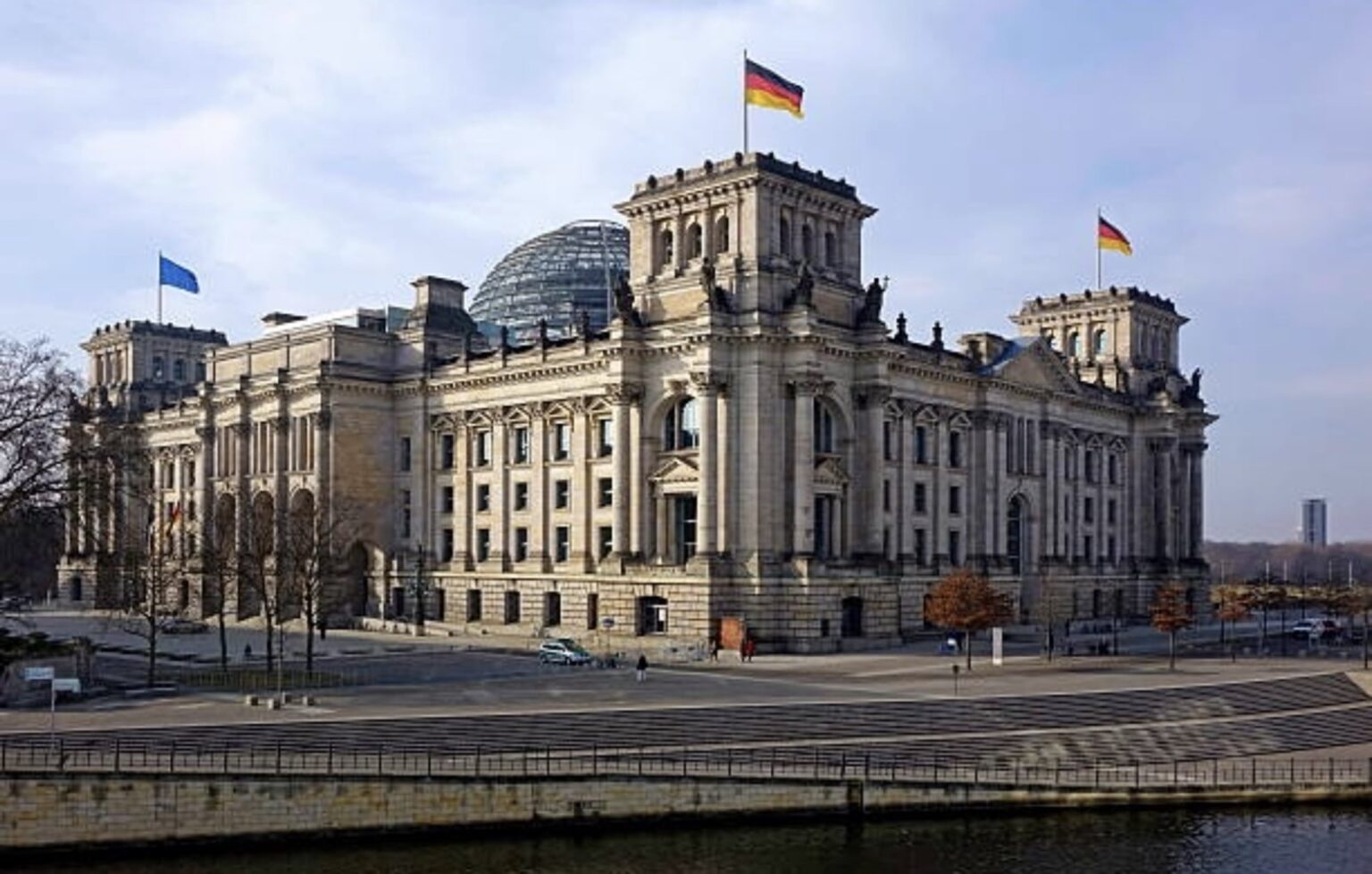
Germany’s cabinet approved sweeping new legislation Wednesday authorizing federal police to shoot down rogue drones, a direct response to the Munich Airport disruptions that stranded over 10,000 passengers last week and mounting evidence of Russian hybrid warfare across Europe.
The emergency legislation modernizes a Federal Police Act that hasn’t been updated since 1994—before consumer drones even existed. With drone incidents surging 33% this year and suspected Russian reconnaissance operations targeting critical infrastructure, German authorities are racing to close a dangerous gap in the nation’s air defenses.
Cabinet Approves Three-Pillar Defense Strategy
Interior Minister Alexander Dobrindt unveiled the reform Wednesday, emphasizing Germany would employ cutting-edge counter-drone technology. “We are reacting decisively, effectively and technically at the cutting edge,” Dobrindt said, according to Euronews.
The new law explicitly authorizes police to neutralize drone threats through multiple methods: electromagnetic pulses, GPS jamming, signal interference, physical interception, and shooting them down when they pose acute danger. The legislation reportedly states police “may employ appropriate technical means against the system, its control unit, or its control link, if averting the danger by other measures would be futile or significantly impeded.”
Munich Airport Crisis Triggers Urgent Response
The push for expanded powers comes after drone sightings forced Munich Airport—Germany’s second-largest—to shut down twice in 48 hours on October 3-4. Military reconnaissance drones, not hobbyist quadcopters, caused the disruptions according to a classified German security report.
Germany recorded 172 drone-related disruptions to air traffic between January and September 2025, up from 129 during the same period in 2024 and 121 in 2023, according to data from Deutsche Flugsicherung (DFS), Germany’s air traffic control.
Germany Looks to Ukraine and Israel for Expertise
The legislation establishes three defensive pillars: a joint federal-state drone defense center for coordinated response, a dedicated Federal Police drone defense unit launching this year, and an aggressive research and development program.
Germany is seeking expertise from countries with extensive counter-drone experience. “To build up expertise, Germany is in dialogue with countries with significantly more experience, such as Israel and Ukraine,” according to the Euronews report.
Russia Blamed as European Crisis Escalates
German Chancellor Friedrich Merz has directly blamed Russia for the drone incursions. Merz “has said he assumed Russia was behind many of the drones flying over Germany last weekend, but none had been armed and were rather on reconnaissance flights,” RTE reported.
With the new law, Germany joins Britain, France, Lithuania, and Romania in granting security forces shoot-down authority. The legislation now awaits parliamentary approval.
DroneXL’s Take
Germany’s drone defense awakening comes remarkably late for Europe’s largest economy. The Federal Police Act hasn’t been touched since 1994—the same year the first consumer GPS satellites became operational and years before DJI even existed. That a 31-year-old law governs responses to sophisticated military reconnaissance drones shows how unprepared Western Europe was for modern aerial threats.
について classified report we covered last week revealing military-grade reconnaissance platforms over Munich transformed this from a mystery into a confirmed state-sponsored operation. These aren’t hobbyists flying too close to airports—they’re coordinated intelligence-gathering missions targeting Europe’s busiest aviation hubs during peak travel periods.
The three-pillar approach signals Germany is finally taking counter-drone warfare seriously. Learning from Ukraine—which faces daily drone attacks—and Israel—which pioneered layered air defense—makes strategic sense. But the real test comes when federal police must decide whether to shoot down a fast-moving drone over a densely populated area like Munich. Debris from a downed drone can be nearly as dangerous as the drone itself.
What’s most telling: Germany dismantled its air defense systems in 2010, assuming the era of airborne threats had ended. That miscalculation is now costing millions in disrupted flights and forcing a crash course in 21st-century hybrid warfare.
What do you think? Share your thoughts in the comments below.
Photo credit: X
これをシェアしよう:
DroneXL.coをもっと見る
購読すると最新の投稿がメールで送信されます。