

解体工事が進められていた「旧香川県立体育館」が、保存活用に向けての“最後のチャンス”を迎えています(詳細はこちらの記事を→https://bunganet.tokyo/kagawastop/)。この機に、BUNGA NETでは緊急連載「旧香川県立体育館に思う──アーキテクトボイス50」を行います(発起人:田根剛、佐々木睦朗、北山恒、宮沢洋)。この建築や今回の経緯への思いを、1日1人ずつアップしていきます。20人目は、「香川は自分にとっての聖地」と語る建築家の千葉学氏です。(ここまでBUNGA NET編集部)
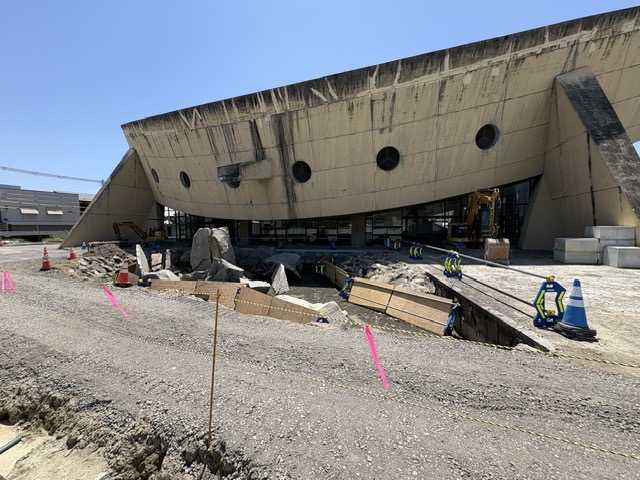 和泉正敏らによる外構が解体されていく旧香川県立体育館(2026年5月10日に撮影)(写真:宮沢洋、以下も)

時を重ねることに知恵を絞る場を
香川県は、建築を学び始めた頃、そして設計の仕事をするようになった今も常に思いを馳せる地の一つです。何としても見にいきたいと思う建築が数多くあるからです。最近完成したあなぶきアリーナや県庁舎はもちろん、猪熊弦一郎現代美術館、直島や豊島の一連のプロジェクト、旧県立図書館、坂出人工土地、そして旧県立体育館など、たくさんの興奮と学びをいただき、今も時々訪れる地です。加えて私の初めての大きな仕事(和洋女子大学佐倉セミナーハウス)は、現在のイサム・ノグチ庭園美術館ができる遥か前からノグチさんのパートナーでもあった和泉正敏さんに石積みをお願いしたこともあり、美術館になる前のアトリエには足繁く通いました。そこもまた、必ず思い起こす場所の一つです。そんな様々な経験や記憶も含め、やはり香川県は私にとって聖地なのです。
そしてこの記憶は、単に一つ一つの建築だけの記憶として輝いているわけではないのもまた事実です。ノグチさんのアトリエは、雄大な屋島を見ながら穏やかな牟礼の町に入った途端聞こえてくる石を刻むノミの音に加え、露わになった山肌に刻まれた石切場としての時間が一体となって経験されることの感慨であり、またかつての商家や酒蔵がアトリエに、そして美術館となって人々に使い続けられている歴史の重なりに対する静かな喜びです。
思い返せば香川県が私にとって特別なのは、この時間が空間として蓄積していることなのだと改めて気付かされます。屋島に象徴される太古の昔からある地勢に加え、金刀比羅宮や金比羅大芝居、農村歌舞伎舞台や善通寺、あるいは琴電滝宮駅や土讃線琴平駅など、様々な時代の痕跡が重なり合って街ができています。そして県立体育館も、その価値は改めて語る必要もないと思いますが、私自身はその美しさ、力強さに圧倒されたのと同時に、まるで海から乗り上げた巨大な船のような造形が、高松市に広がるため池の風景とも連動し、記憶に強く刻まれたのです。そして、その外構が和泉さんによる石積みであり、あの牟礼の山から切り出した庵治石であることも、愛着を一層募らせています。時間が様々なかたちで土地に刻まれているからこそ、それぞれが魅力を相乗的に増幅しているのです。
体育館を保存すべきか解体すべきか、その是非については正直なところ、詳細な事情も把握できていないので、判断がつきません。もちろん建築に携わる者としては、建物が壊されることには、悲しい気持ちしかありません。そこに注がれた想像を絶する人々の思いや知恵、そして時代の刻印としてある建築が一瞬にして失われてしまうことに、大きな喪失感も覚えます。日本はとかく親世代−戦後の建築はあまり大切にせず、祖父母や曾祖父母の世代−明治や江戸時代の建築を大切にする風潮があります。親には反発し、祖父母の時代は良かったと懐かしむのは世の常なのでしょうが、今改めてそのことを考え直す時なのだと思います。
香川県庁は、建て直した方が安くて良いものができる、といった常套句に抗って、多くの予算を割いて保存した素晴らしいお手本です。それを今なお使い続けていることに、日本でもこのような判断を下せる自治体があるのだと、勝手ながら自分ごとのように誇らしく思ってもいました。長い時間の中で、様々な時代の建物を遺してきたことは、そう簡単なことではなかったと思います。時にはたった一人の熱意が取り壊すという判断を覆したこともあるのだと思います。ただ、その一つ一つの判断の積み重ねが今の香川県の魅力の一つであることは間違いありません。今改めて、時を重ねていくことに知恵を絞る場を持てないものかと、切に願います。
千葉学/建築家、千葉学建築計画事務所代表、東京大学名誉教授
プロフィルはこちら→http://chibamanabu.co.jp/profile-en/
 解体工事が始まる前の旧香川県立体育館(下の写真2点も)。編集部注:すでに解体された外構のデザインは和泉正敏(1939〜2021)と山本忠司(1923〜1998)による。和泉正敏はイサム・ノグチの石の彫刻制作を20年以上にわたって支えた石彫家。自身でも石の彫刻を手がけ、この体育館の両脇にある池は和泉らしさのよく出た名作だった。山本忠司は当時、香川県庁のインハウスアーキクテトで、この体育館の9年後に瀬戸内海歴史民俗資料館(1973年)を完成させ、自治体所属の建築家として初の日本建築学会賞作品賞を受賞する。2024年には1970年代の建築として初めて国の重要文化財となった(こちらの記事)


A Place to Reflect on the Passage of Time
Kagawa Prefecture is one of the places I’ve always thought about—both when I first began studying architecture and now that I’ve started working as an architect. That’s because there are so many buildings there that I simply must see. From the recently completed Anabuki Arena and the Prefectural Government Building, of course, to the Genichiro Inokuma Museum of Contemporary Art, the series of projects on Naoshima and Teshima, the former Prefectural Library, the Sakaide Reclaimed Land, and the former Prefectural Gymnasium—this is a place that has given me so much excitement and learning, and one I still visit from time to time. In addition, for my first major project—Wayo Women’s University Sakura Seminar House—I commissioned Masatoshi Izumi, who had been Isamu Noguchi’s partner long before the current Isamu Noguchi Garden Museum was established, to do the stone masonry. As a result, I frequently visited the studio there before it became a museum. That, too, is a place I always recall. Taking all these various experiences and memories into account, Kagawa Prefecture is truly a sacred place for me.
And it is also true that these memories do not simply shine as memories of individual buildings alone. Noguchi’s studio evokes a profound sense of emotion—the sound of chisels carving stone, audible the moment one enters the tranquil town of Mure while gazing at the majestic Yashima; the time spent as a quarry, etched into the exposed mountainside; and the quiet joy derived from the layers of history, as former merchant houses and sake breweries have been transformed into a studio and then a museum, continuing to serve the people.
Looking back, I am reminded once again that what makes Kagawa Prefecture special to me is the way this time has accumulated as space. In addition to the ancient topography symbolized by Yashima, the city is shaped by the overlapping traces of various eras—from Kotohira-gu Shrine and the Kotohira Grand Theater to the Rural Kabuki Stage and Zentsuji, as well as Kotoden Takinomiya Station and Kotohira Station on the Dosan Line. As for the Prefectural Gymnasium—whose value, I believe, needs no further explanation—I was personally overwhelmed by its beauty and power. At the same time, its form, resembling a gigantic ship that has emerged from the sea, harmonized with the landscape of the irrigation ponds spreading across Takamatsu City, leaving a lasting impression on my memory. Furthermore, the fact that its exterior walls are stonework by Mr. Izumi, crafted from Aji stone quarried from Mount Mure, has deepened my affection for it even further. It is precisely because time has been etched into the land in various ways that each element synergistically amplifies the others’ charm.
As for whether the gymnasium should be preserved or demolished—to be honest, since I am not fully aware of the detailed circumstances, I cannot make a judgment. Of course, as someone involved in architecture, I can only feel sadness at the thought of the building being torn down. I also feel a profound sense of loss at the thought that a building—a testament to the unimaginable dedication and wisdom of the people who poured their hearts into it, as well as the mark of its era—could vanish in an instant. In Japan, there is a tendency to place less value on the architecture of our parents’ generation—that of the postwar era—and to cherish instead the architecture of our grandparents’ and great-grandparents’ generations—from the Meiji and Edo periods. It is perhaps human nature to rebel against our parents while nostalgically longing for the “good old days” of our grandparents’ era, but I believe now is the time to reconsider this mindset.
The Kagawa Prefectural Government Building is a wonderful example of how, defying the cliché that “it’s cheaper and better to rebuild,” a significant portion of the budget was allocated to its preservation. The fact that it is still in use today made me feel—perhaps presumptuously—a sense of pride as if it were my own achievement, knowing that there are local governments in Japan capable of making such decisions. I believe that preserving buildings from various eras over such a long period of time was no easy feat. At times, I imagine the enthusiasm of a single individual was enough to overturn a decision to demolish a building. However, there is no doubt that the accumulation of these individual decisions is one of the things that makes Kagawa Prefecture so appealing today. Now, more than ever, I earnestly hope that we can create a space where we can pool our wisdom to navigate the passage of time.
Manabu Chiba / Architect, Representative of Manabu Chiba Architectural Planning Office, Professor Emeritus, University of Tokyo
一覧ページはこちら↓
