
「TOEIC対策の授業」と聞くと、皆さんはどんなイメージを持っていますか?
ひたすら問題を解く
ビジネス専門用語を暗記する
テクニックを中心に学ぶ
実は、そのどれも少し違います。
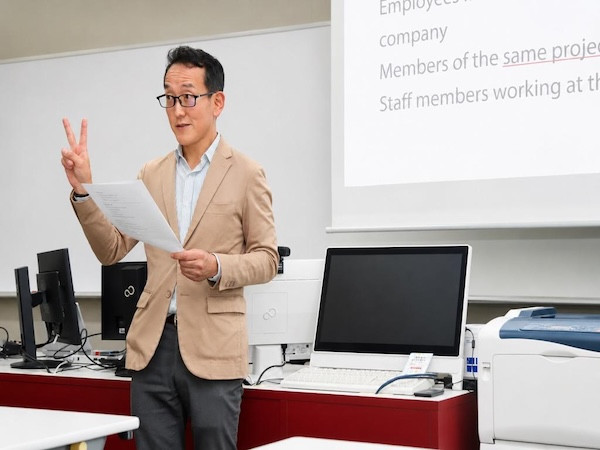
国際英語学科1年次必修科目の「Test Taking Skills I」を担当するのは、これまで何度もTOEICを受験し、長年にわたり英語教育にその知識と経験を還元してきた柴田雄介教授です。
この授業では、TOEIC Listening & Reading Test を題材として、単なる「試験対策」にとどまらない、実践的な英語力を養っていきます。
まず、授業で特に重視しているのは「語彙力」です。TOEICに限らず、知っている単語が増えるほど、Listening も Reading も理解しやすくなります。逆に、文法を理解していても、語彙が不足していると内容理解は難しくなります。そこでまず重要になってくるのが、「どのような単語を優先的に学ぶべきか」という視点です。TOEICは「ビジネス英語のテスト」というイメージを持たれることが多いため、「難しいビジネス専門用語を勉強しなければならない」と誤解されがちです。しかし実際には、同僚同士の会話、店舗での接客、メール、旅行、イベント案内など、「会社という舞台の日常会話」が中心です。そのため授業では、TOEICに頻出する語彙から優先的に学び、効率的に英語力を伸ばしていきます。
More than simply answering questions: developing practical English skills and effective strategies
What sort of image comes to mind when you hear the phrase “a TOEIC preparation course”?
Perhaps:
endlessly working through practice questions
memorising difficult business terminology
focusing mainly on test-taking techniques.
In reality, Test Taking Skills I is rather different.
This compulsory first-year course in The Department of English as a Global Language is taught by Professor Yusuke Shibata, who has taken the TOEIC test many times himself and has spent years applying that knowledge and experience to English education.
Using the TOEIC Listening & Reading Test as its foundation, the course aims not merely to prepare students for the exam, but to help them develop practical and usable English skills.
One of the areas given particular emphasis in class is vocabulary. Quite simply, the more words students know, the easier it becomes to understand both spoken and written English. On the other hand, even a strong grasp of grammar is often not enough if vocabulary is limited.
For that reason, an important part of the course involves learning which words should be prioritised. Because TOEIC is often associated with “business English”, many people assume that students must memorise highly specialised business terminology. In fact, however, the test mainly focuses on everyday communication in workplace settings: conversations between colleagues, customer service interactions, emails, travel arrangements, and event announcements.
Students therefore focus first on the vocabulary that appears most frequently in TOEIC, allowing them to improve their English efficiently and systematically.