
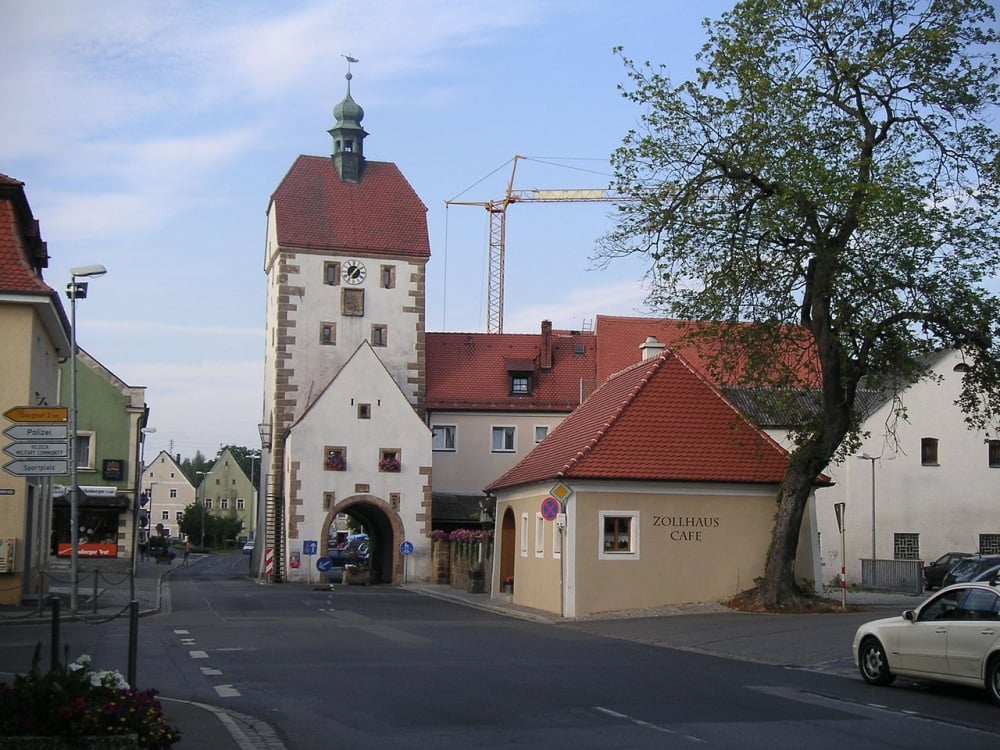
US pullout of 5,000 troops from Germany could hit Vilseck’s economy.
VILSECK – The picturesque small town of Vilseck in Bavaria, Germany, has hosted United States troops since the end of the Second World War.
Now, the town faces the prospect of major disruption following plans by President Donald Trump to withdraw at least 5,000 US troops from Germany, according to Reuters..
Although details of the units affected have not yet been officially announced, the 2nd Stryker Cavalry Regiment, the only permanent US combat brigade in Germany based at Rose Barracks in Vilseck, is believed to be among those expected to leave.
“The impact would be enormous,” said Vilseck’s new mayor, Thorsten Graedler, who only took office this week and is already facing the prospect of thousands of job losses in a rural region heavily dependent on the military base.
He explained that, over the years, the US military presence has created strong economic dependence.
Thousands of stable jobs and a steady stream of customers for local businesses have made the town highly reliant on the military presence.
“The whole town of Vilseck depends heavily on this military training area for its livelihood, from bars and restaurants to garages and supermarkets,” he said.
US Pressure on Europe
The troop withdrawal plan comes amid pressure from Washington for European countries to increase defence spending, alongside criticism that reliance on the US military has caused Europe to neglect strengthening its own armed forces.
During Trump’s first term, plans to withdraw the Stryker Cavalry Regiment, a combat unit equipped with Stryker armoured vehicles, had previously been discussed, but were later cancelled under President Joe Biden.
“It is important to note that there has been no official confirmation that the Stryker forces will actually be withdrawn. So I still have hope,” Graedler said.
The government in Berlin said it was not surprised by the plans, although Germany has increased defence spending in recent years to strengthen its military capabilities.
However, beyond the economic consequences, the changes are also expected to create a cultural shock for the town of around 6,500 residents, whose population has long been outnumbered by US personnel and their families.
At the height of the Cold War, as many as 250,000 US troops were stationed in Germany.
Their presence became an integral part of life in many small towns, particularly in south-western regions such as Vilseck, which was once nicknamed “little America” because of its extensive facilities, including housing, shops and its own services.
“I have never known Vilseck without living alongside Americans,” Graedler said.
Local Impact
At present, around 35,000 US troops remain stationed in Germany as the largest American contingent in Europe.
Their presence is still highly visible in Vilseck, from shopping activities in supermarkets to participation in local sports and motoring clubs.
“I’ve been here since 2022, almost four years. There’s nothing I dislike about Germany,” said Culinary Sergeant Robert Moore, 31, who lives around 20 km from Vilseck.
He described local people as friendly, respectful and “very safe”.
For many residents of Vilseck, the departure of US troops would leave a deep emotional impact.
“When the Strykers arrived, we were worried they might be rough, but they turned out to be very kind,” said Albin Merkl, 66, a retiree who rents apartments to US personnel.
He added that local businesses have greatly benefited from their presence.
Another resident, Judith Georgiadis, 63, who worked in base administration for 17 years, said the town became far quieter after the reduction of US forces following the Cold War.
“Back in the 1980s, life here was incredible. The nights were lively with bars and pubs,” she said.
Now, she believes many people are anxious.
“People working for the American military are afraid. There is huge concern.”
Some business owners are also heavily dependent on customers from the US military.
“Many of us here, business owners, built our businesses entirely around American customers,” said Robert Grassick, owner of Vilseck Military Auto Sales.
However, for some long-time residents, fears about a possible US troop withdrawal are nothing new.
“For years, people have always said, ‘They’re going to leave and close the base,’” said Brenda Hutchinson, 61, whose family has a long history of close ties with US military personnel.
“It was already being discussed when my father was still serving in the military.” (DK/LM)
as a preferred source on Google