
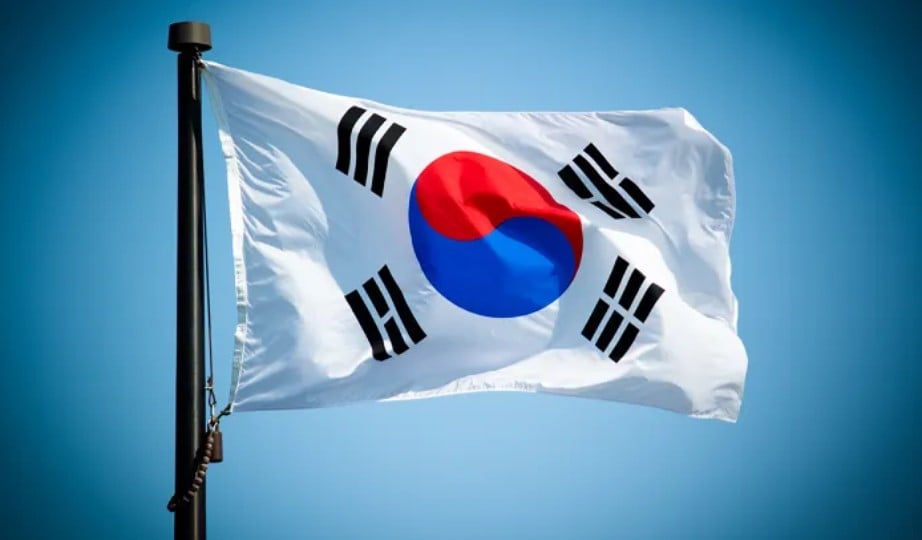
South Korea has sent officials to Oman, Kazakhstan and Saudi Arabia to secure oil supplies.
SEOUL – South Korea has sent a senior government official to Oman, Kazakhstan and Saudi Arabia to secure crude oil supplies that do not need to pass through the Strait of Hormuz, according to a Reuters report.
The presidential chief of staff, Kang Hoon sik, will hold talks with government officials in the three countries, as well as with energy companies and shipping operators.
According to Oilprice, South Korea has already secured 110 million barrels of crude oil for April and May, the report said.
The official told the media that the need to obtain alternative oil supplies was urgent because South Korea relies on shipments passing through the Strait of Hormuz for up to 61 percent of its crude oil imports and 54 percent of its naphtha imports.
Oman lies outside the Strait of Hormuz, making it geographically suitable as an alternative supply source, while Saudi Arabia has redirected its oil flows from east to west and exports them via the Red Sea.
Most of Kazakhstan’s crude oil reaches global markets through the Caspian Pipeline Consortium (CPC), which ends at the port of Novorossiysk in Russia. The CPC pipeline has recently been targeted by Ukrainian drone attacks.
South Korea is one of the most energy dependent countries in the world, making it among the first to feel the impact if the Strait of Hormuz is closed.
Last month, Seoul had to introduce fuel price caps for the first time in three decades to stabilise the market and protect the economy.
The country also imposed driving restrictions on civil servants in March to anticipate potential fuel shortages.
Later that month, it was reported that Seoul was considering extending the restrictions to other drivers if oil prices reached 120 dollars per barrel.
These are the first driving restrictions implemented by South Korea since the early 1990s and the Gulf War. (DK/LM)
as a preferred source on Google