
©︎ Studio Iksha
©︎ Studio Iksha
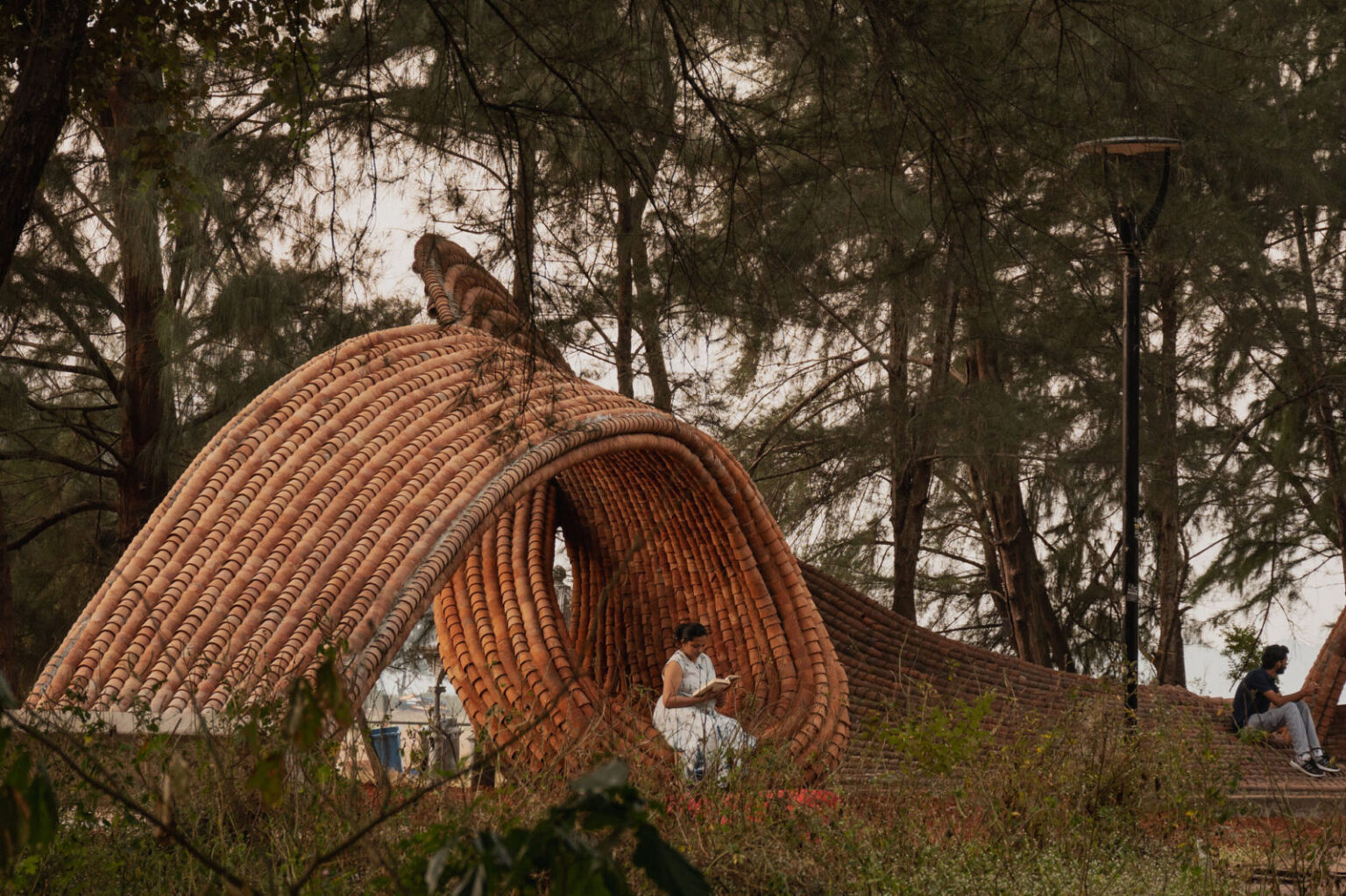
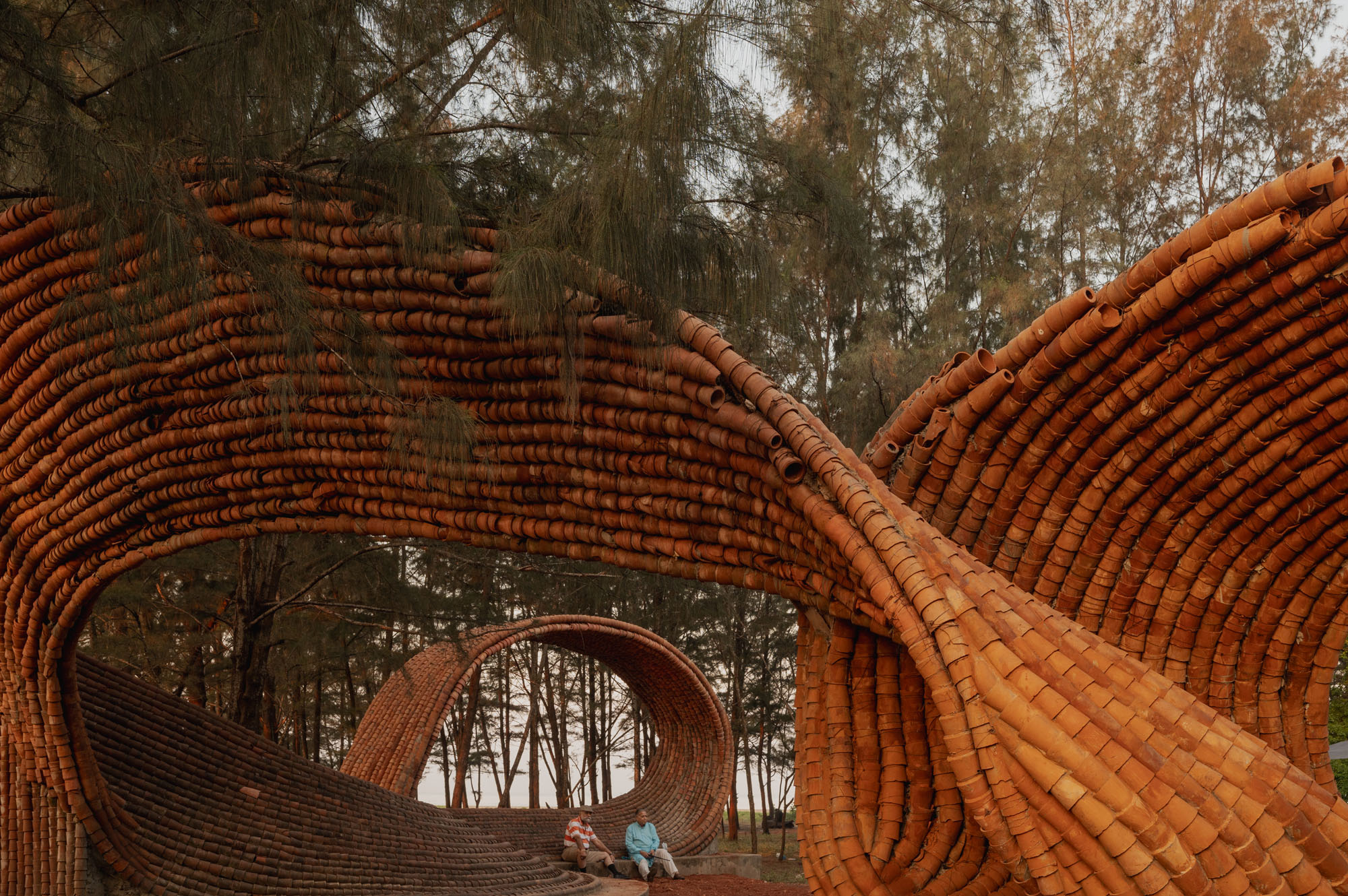
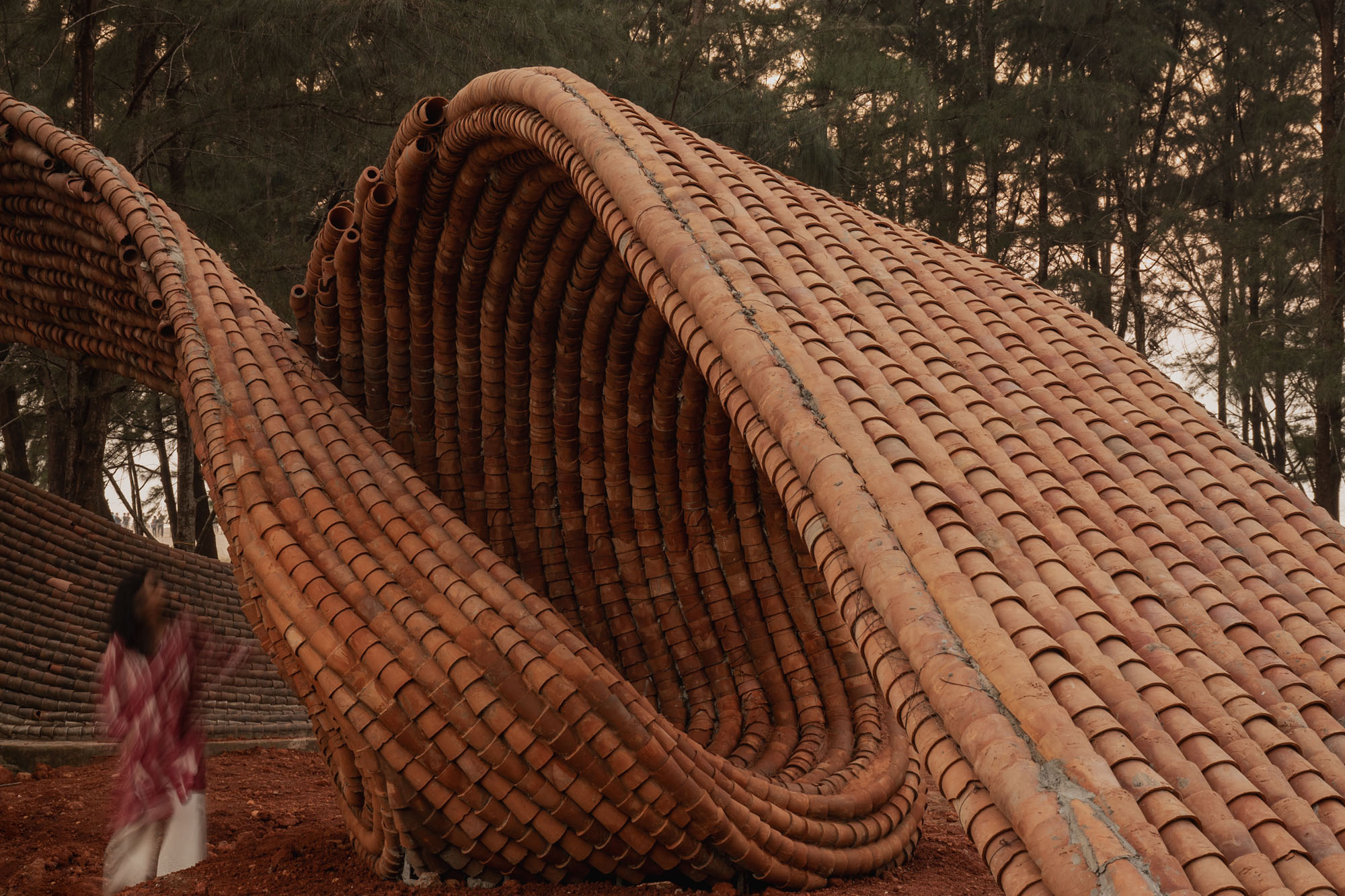
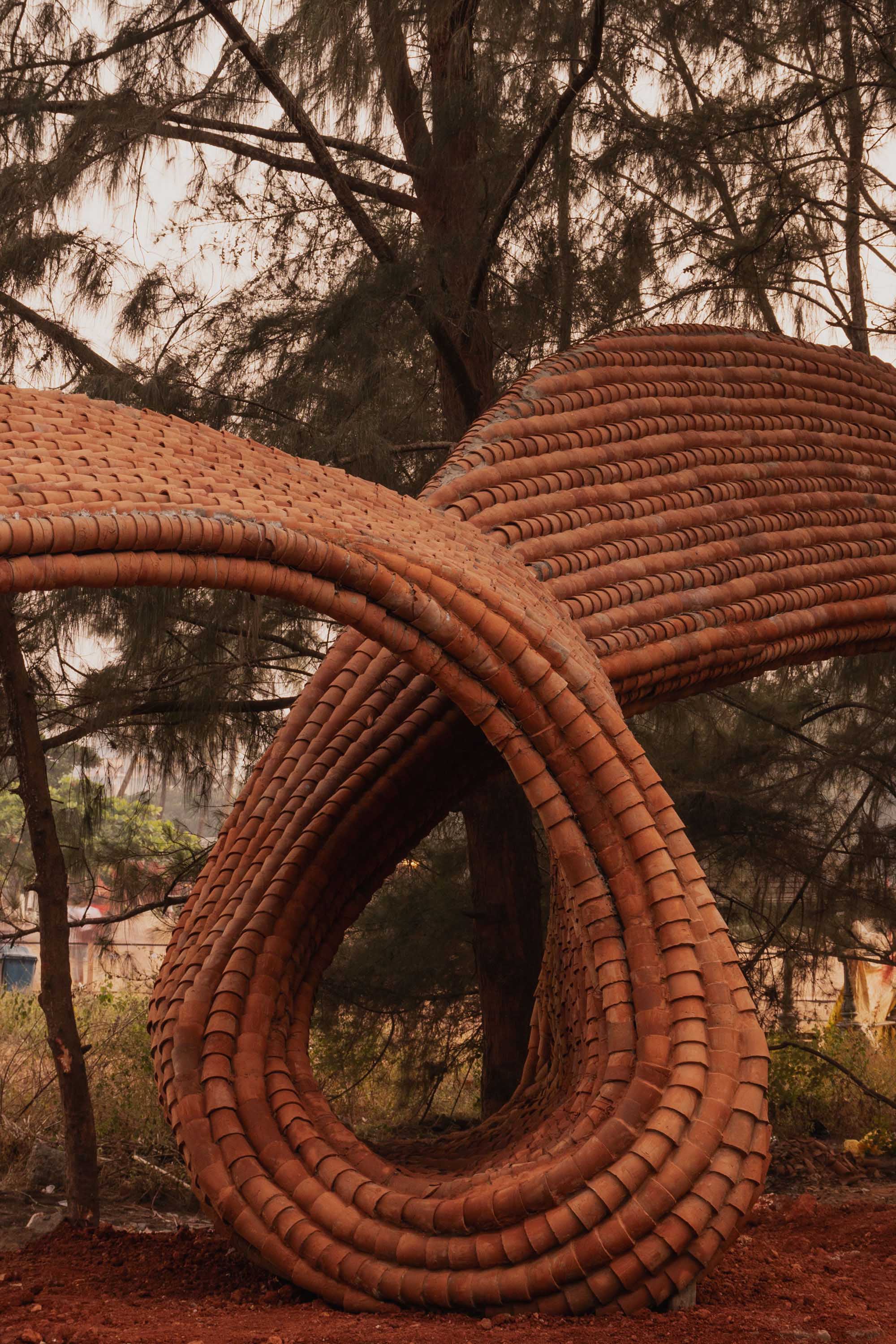
インド・ミラマーの海岸に建つ〈クルハド・パビリオン(Kulhad Pavilion)〉は、インドにてチャイ等を飲むために用いられてきたカップ「クルハド」を用いて構築されたパビリオンです。
泥と廃棄物を使用した建築に特化したインドの設計事務所ウォールメーカーズ(WALLMAKERS)が設計しました。
注目ポイント
回収された18,000個のクルハドのアップサイクル
補強材を用いず成立する「懸垂アーチ(カテナリー・ヴォールト)」
既存の木々の間を縫う、環境に負荷をかけない有機的な平面計画
かつてゴミとして捨てられていたものに建築素材としての可能性を示すプロジェクト
(以下、ウォールメーカーズから提供されたプレスキットのテキストの抄訳)
©︎ Studio Iksha
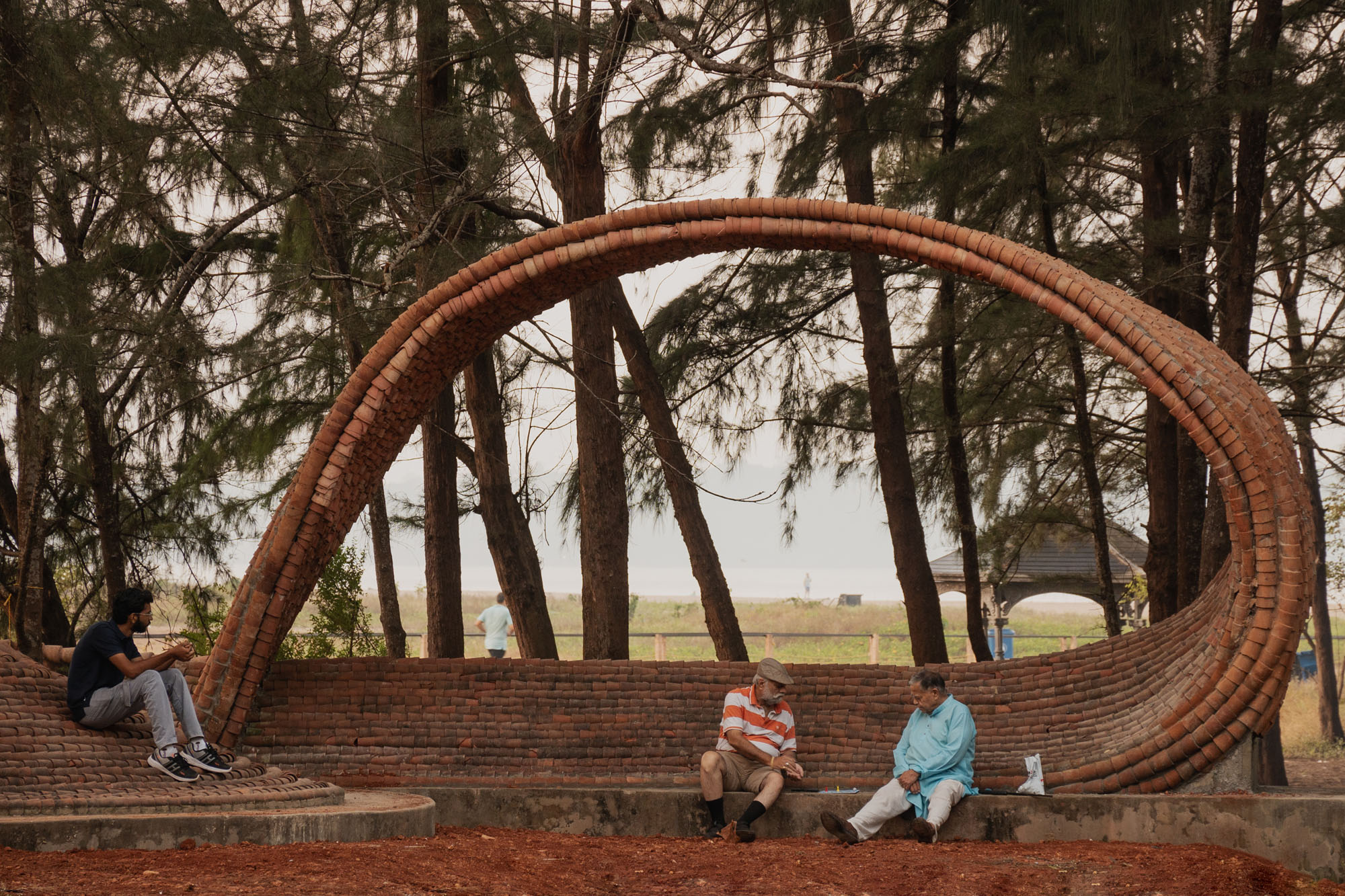
©︎ Studio Iksha
インドの原風景「クルハド(Kulhad)」
「クルハド(泥のカップ)」(テラコッタ製のカップ)は、かつてインドの鉄道駅でよく見かける光景であった。それらは熱いチャイや冷たいラッシーを飲むために用いられ、使い終われば海岸や線路沿いに捨てられる運命にあった。
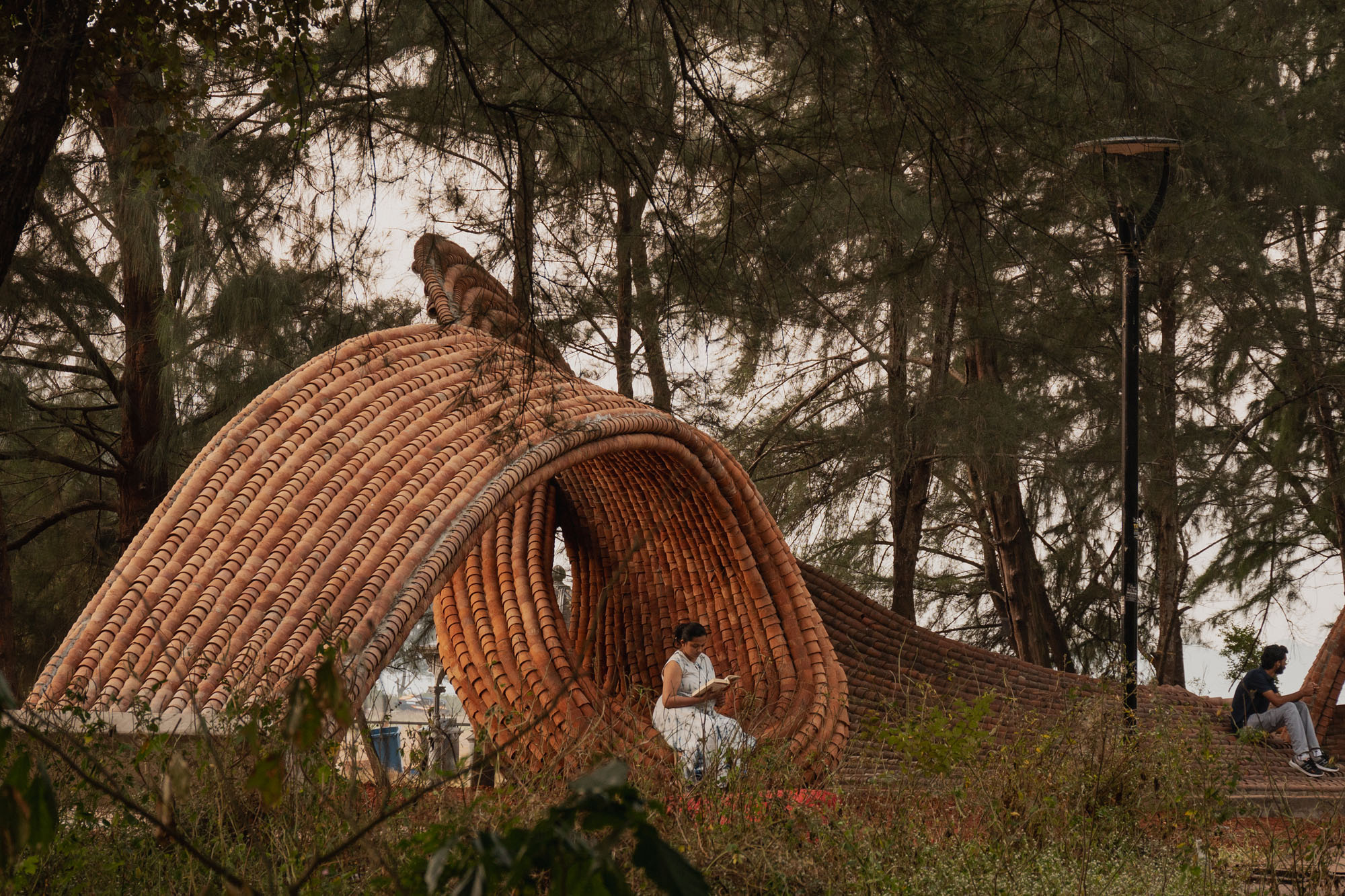
©︎ Studio Iksha
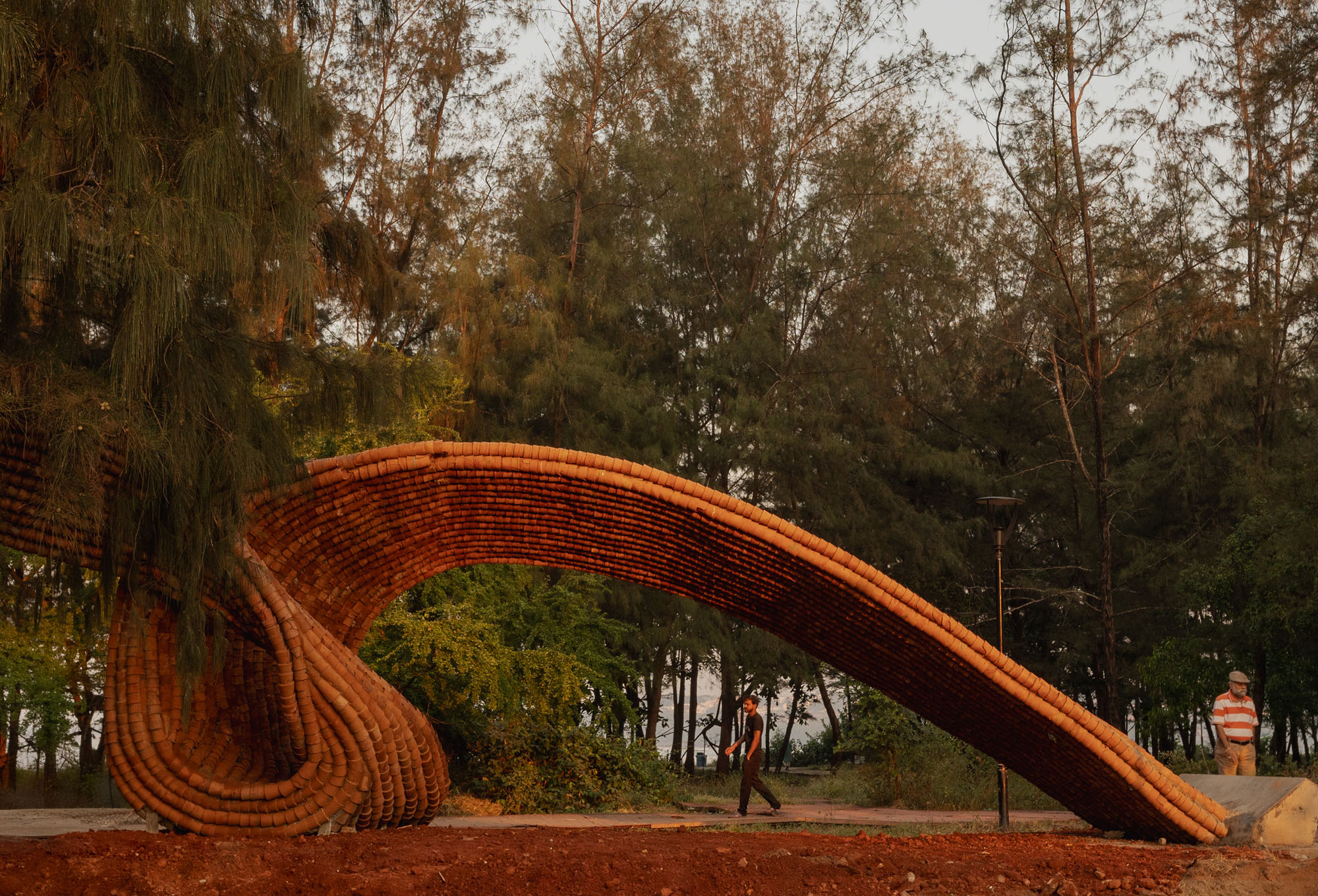
©︎ Studio Iksha
廃棄物の存在に意識を向ける、18,000個のカップによる空間
2025年セレンディピティ・アート・フェスティバルの一環として、ゴア州ミラマービーチにパビリオンを建設する機会が訪れた際、この土着の素材を用いた〈クルハド・パビリオン〉の建設こそがふさわしいという結論に至った。
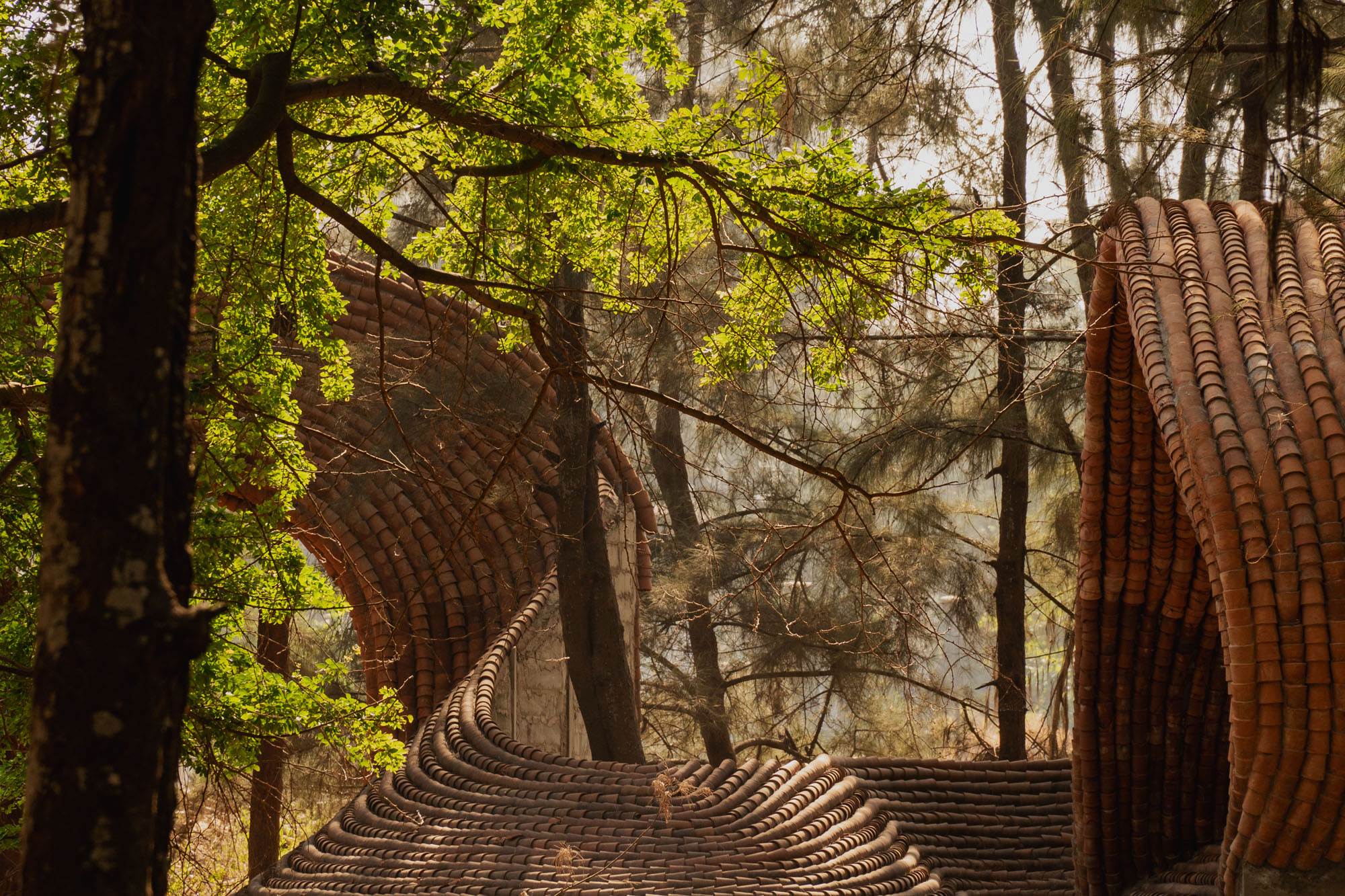
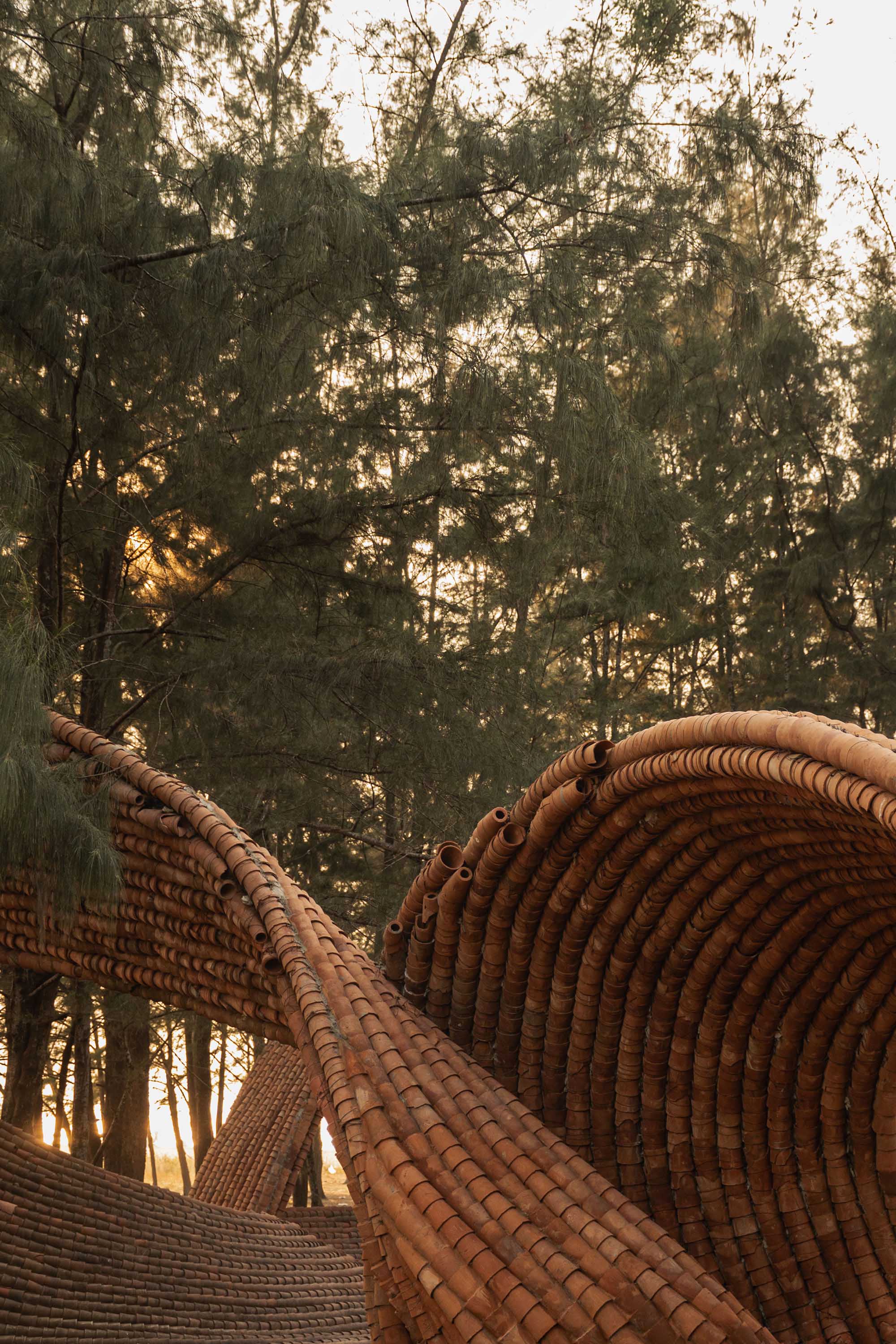
ムンバイのダラヴィ地区の地域コミュニティから、実に18,000個ものクルハドが回収された。これらのクルハドのみで構築されたパビリオンは、我々が排出する膨大な廃棄物の存在を強烈に想起させる。それと同時に、かつてゴミとして捨てられていたものが、浜辺を訪れる多くの人々にとっての日陰となり、建築素材として積極的に活用され得るというポジティブな可能性をも示唆しているのである。
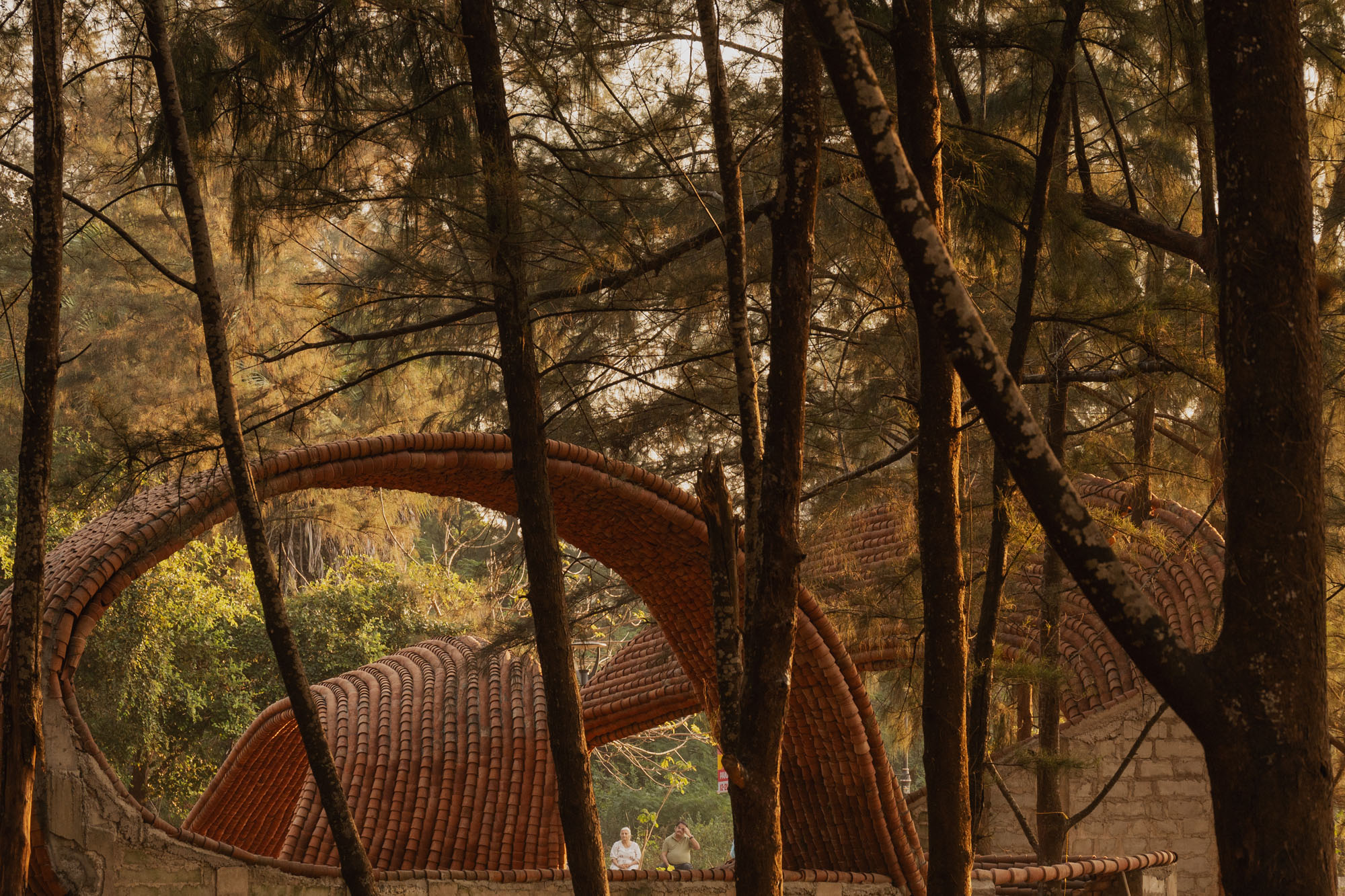
©︎ Studio Iksha
©︎ Studio Iksha
自然と調和する懸垂アーチ構造
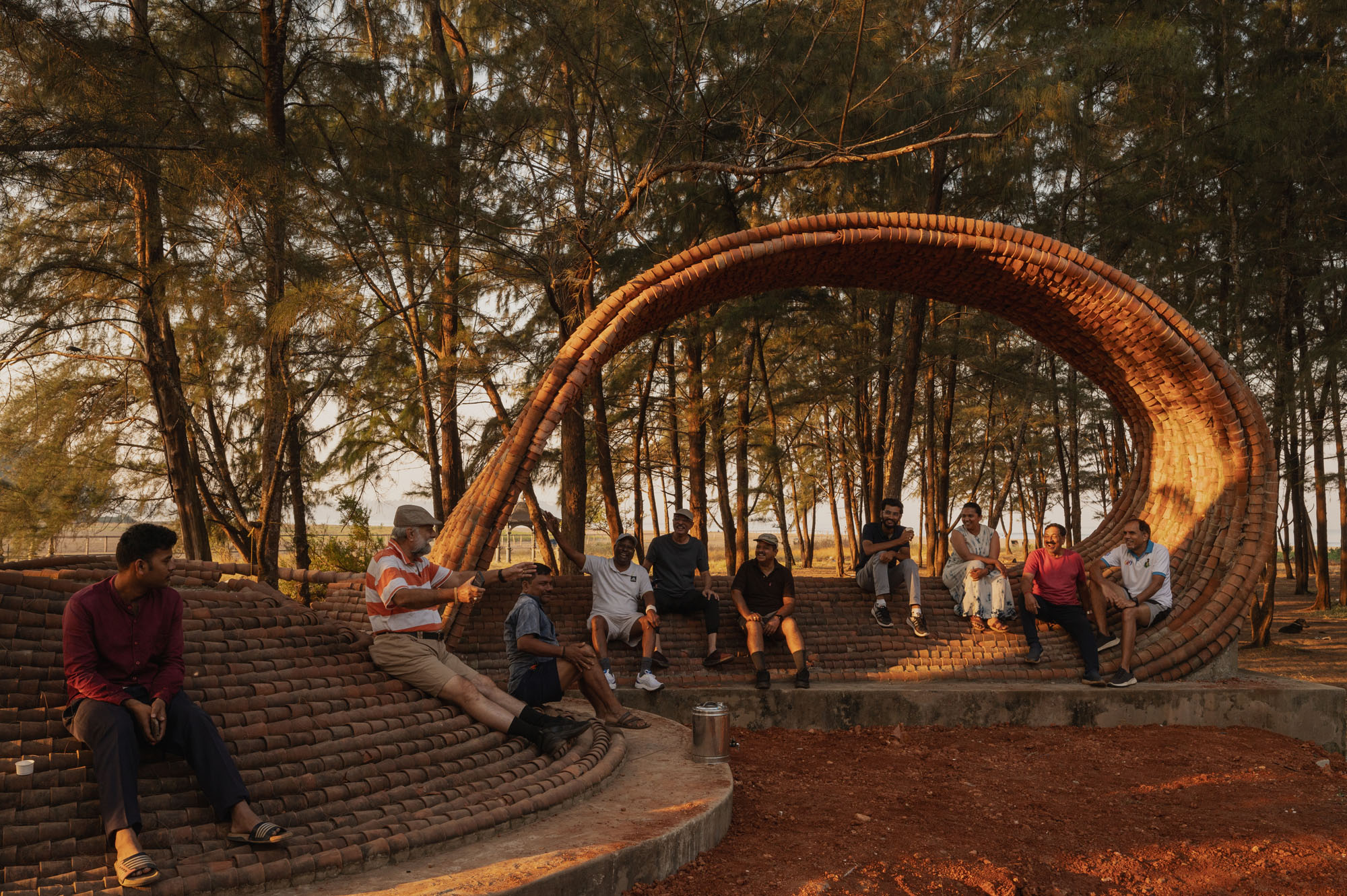
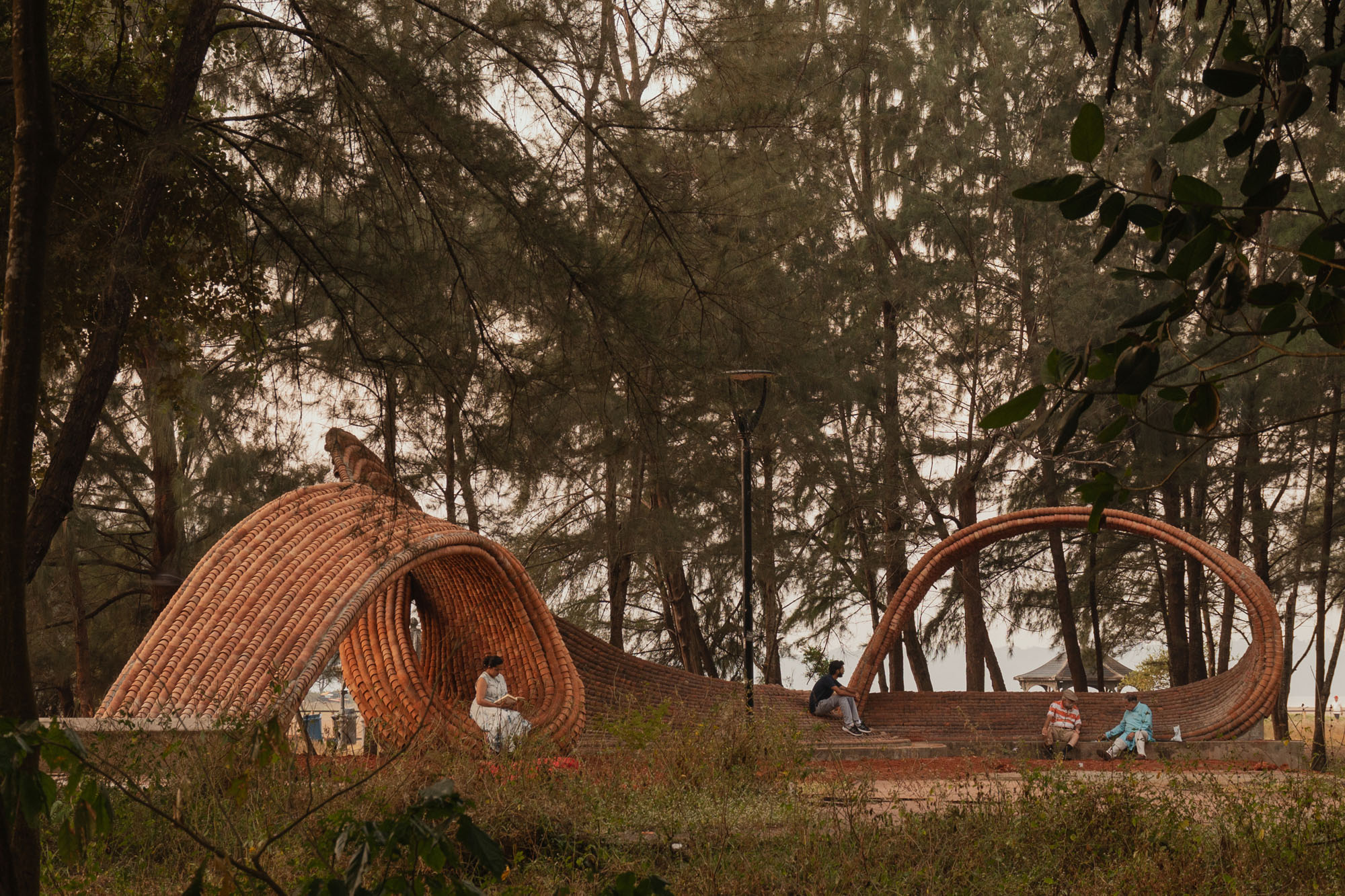
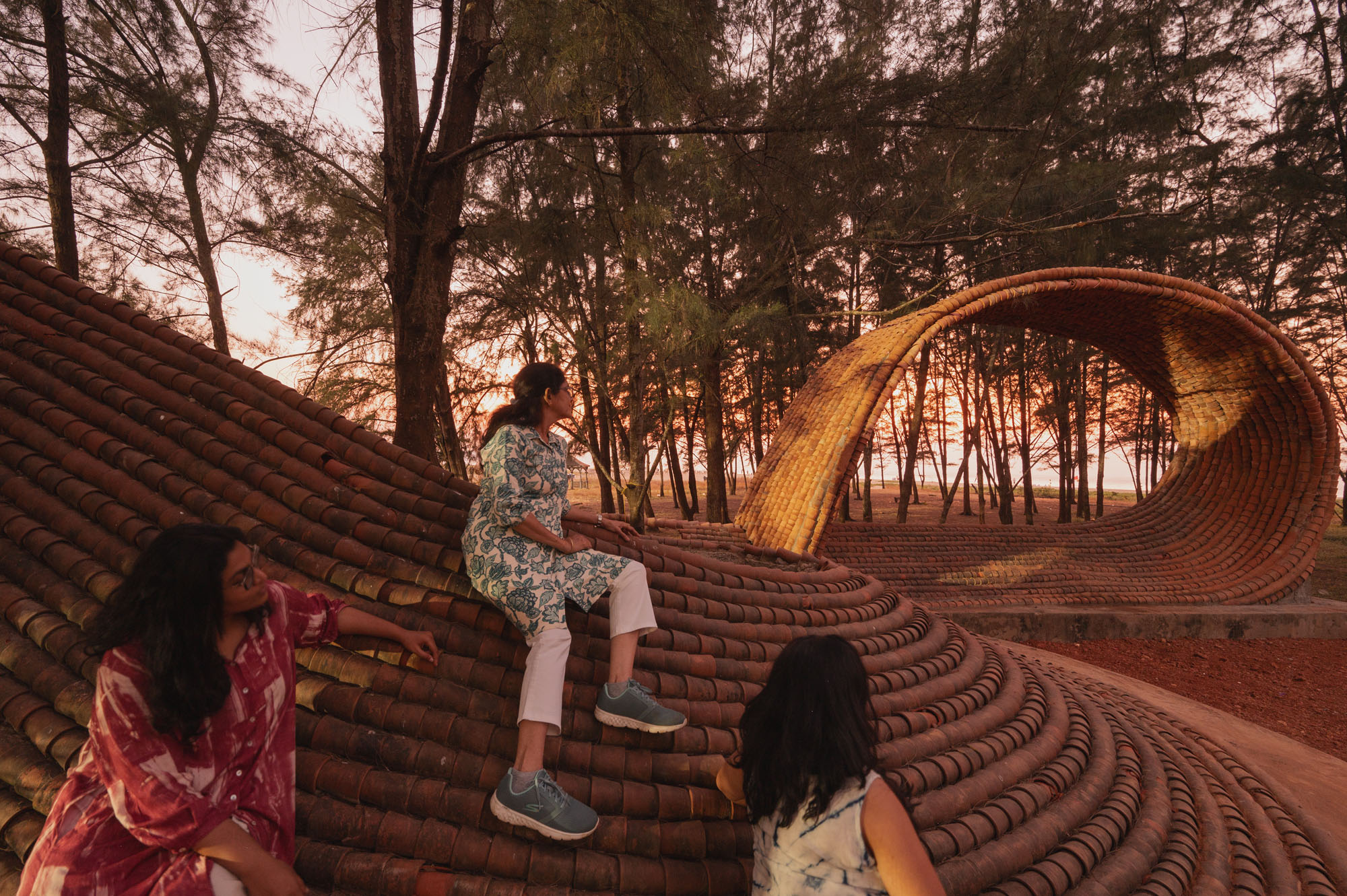
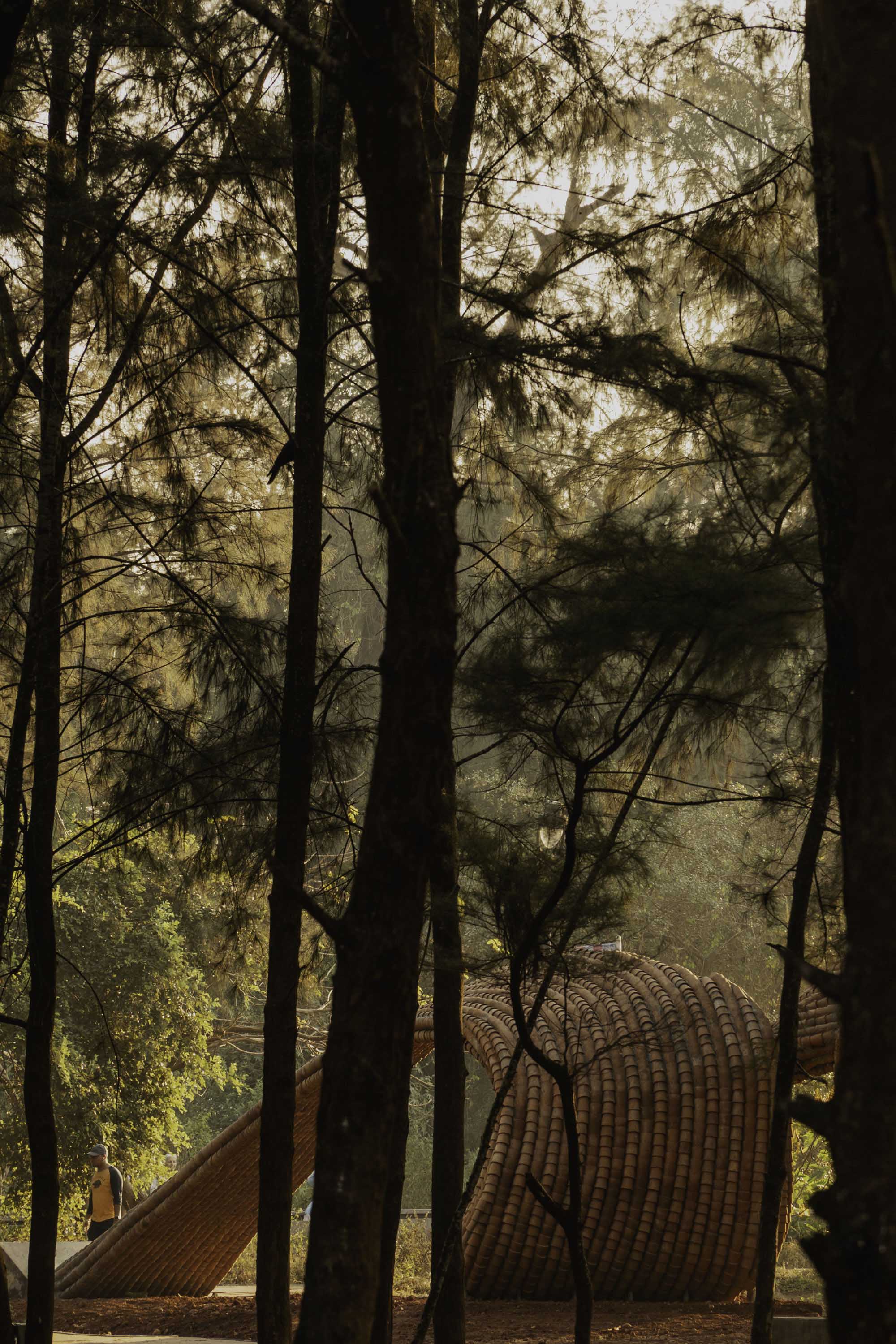
構造の主体となるのは、上部構造全体の重量を地面へと伝達する3つの圧縮懸垂アーチ(カテナリー・ヴォールト)である。補強を施さないこれらのアーチ群は、既存の木々の間を蛇行するように配置され、ビーチ沿いに自然な座席やステージを形成している。
このようにして生まれた空間は、人間のみならず、その場に集う動物たち双方に対して日陰を提供することを目的としている。
©︎ Studio Iksha
©︎ Studio Iksha
©︎ Studio Iksha
©︎ Studio Iksha
©︎ Studio Iksha
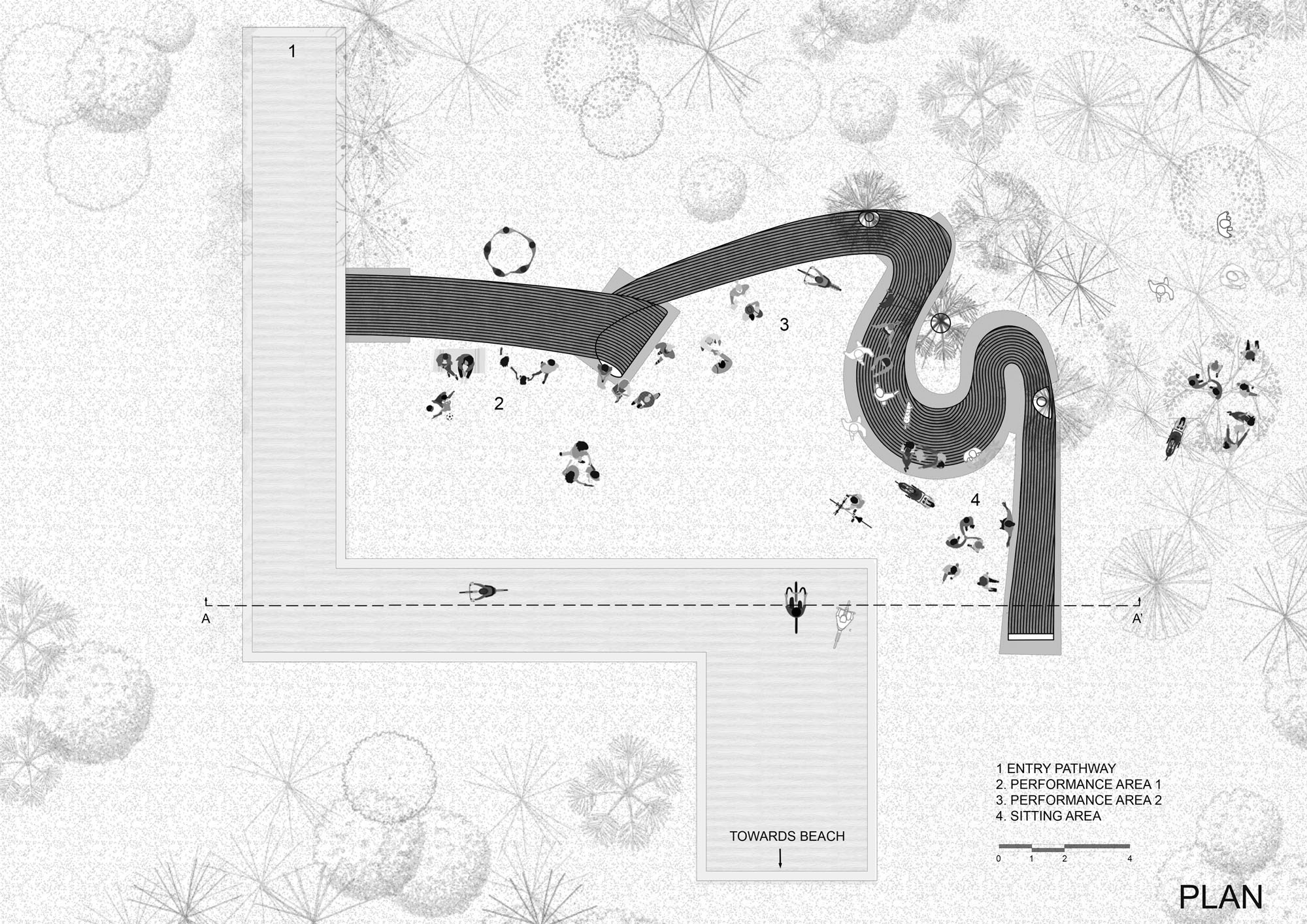
Plan
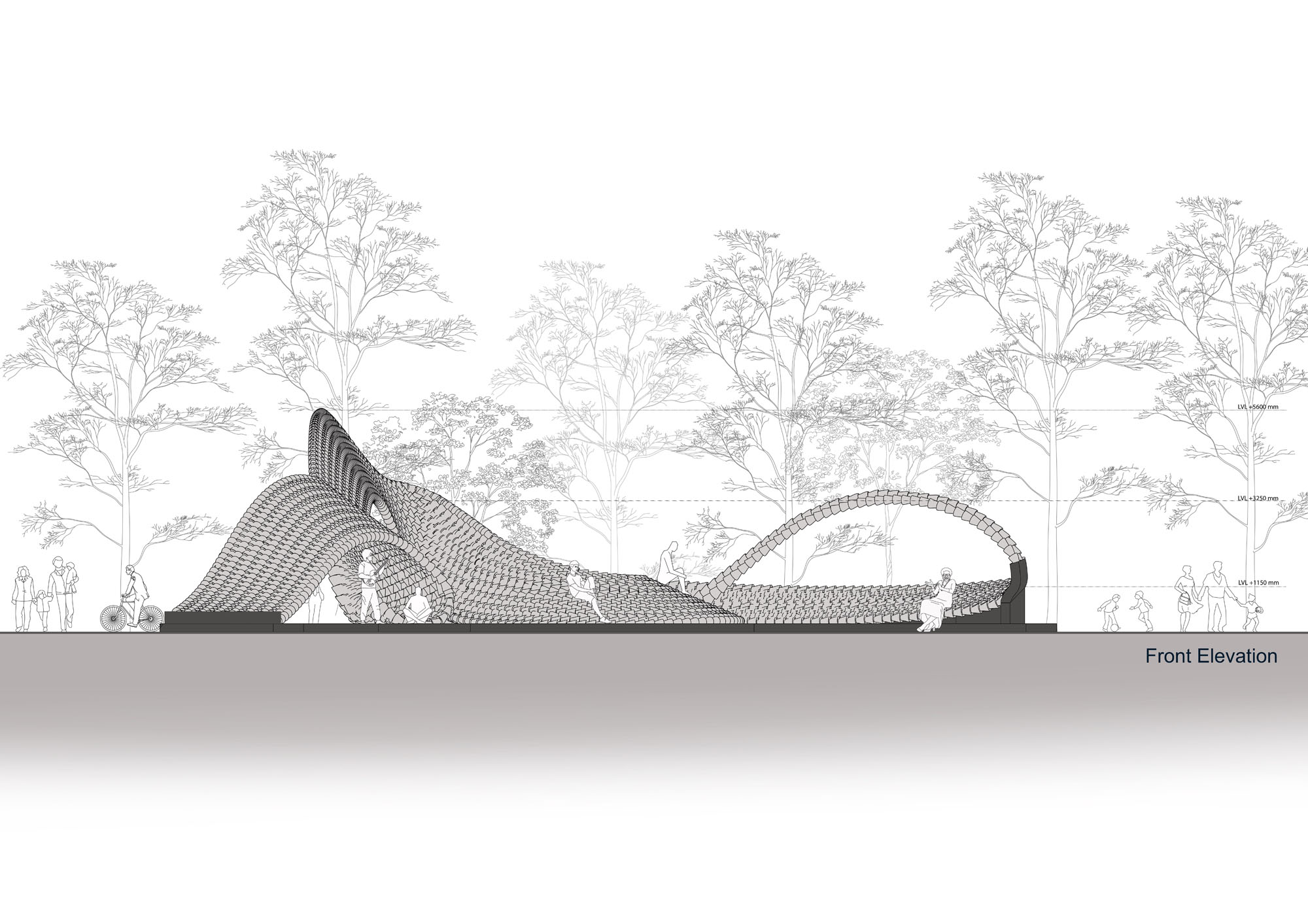
Front Elevation
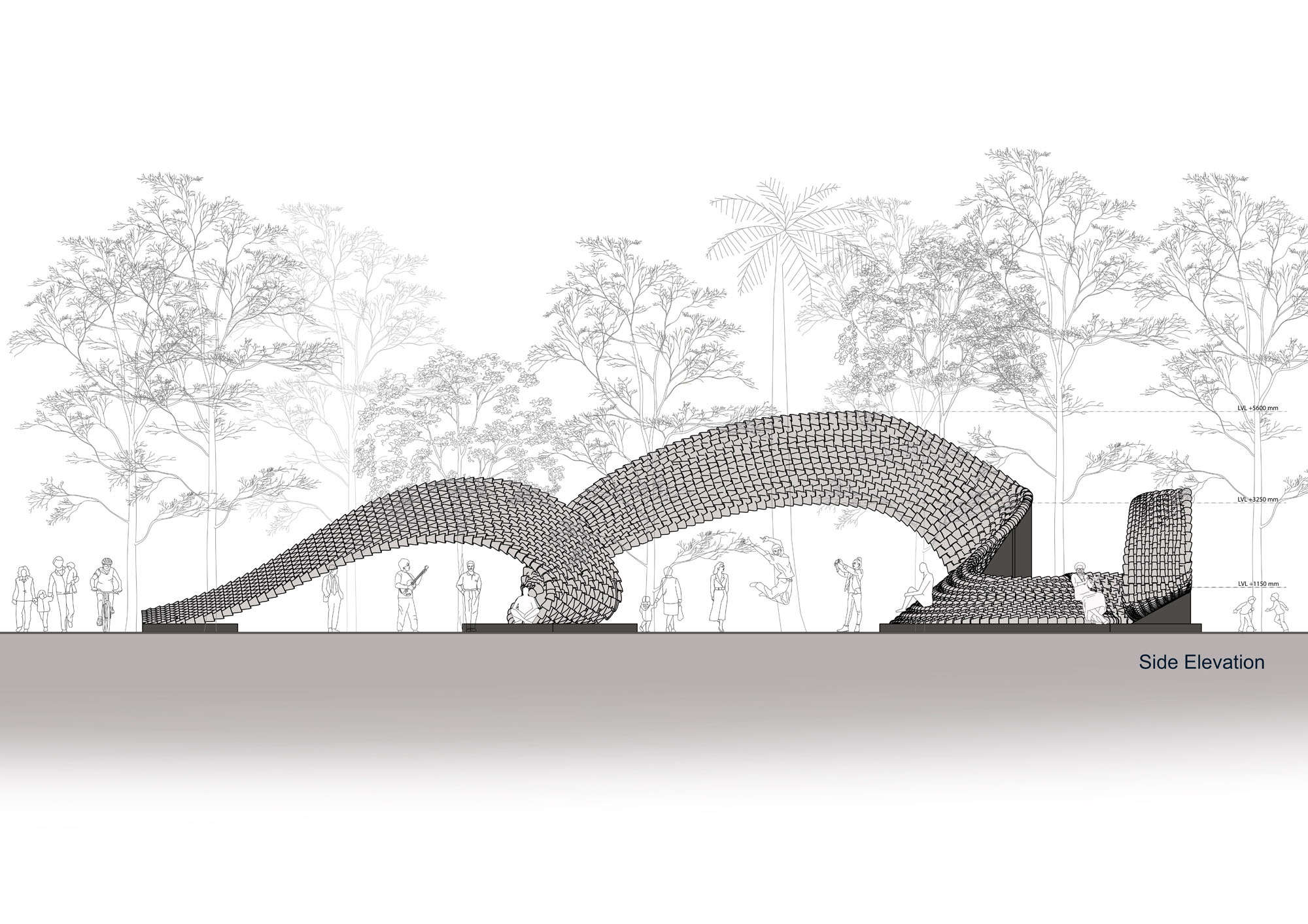
Side elevation
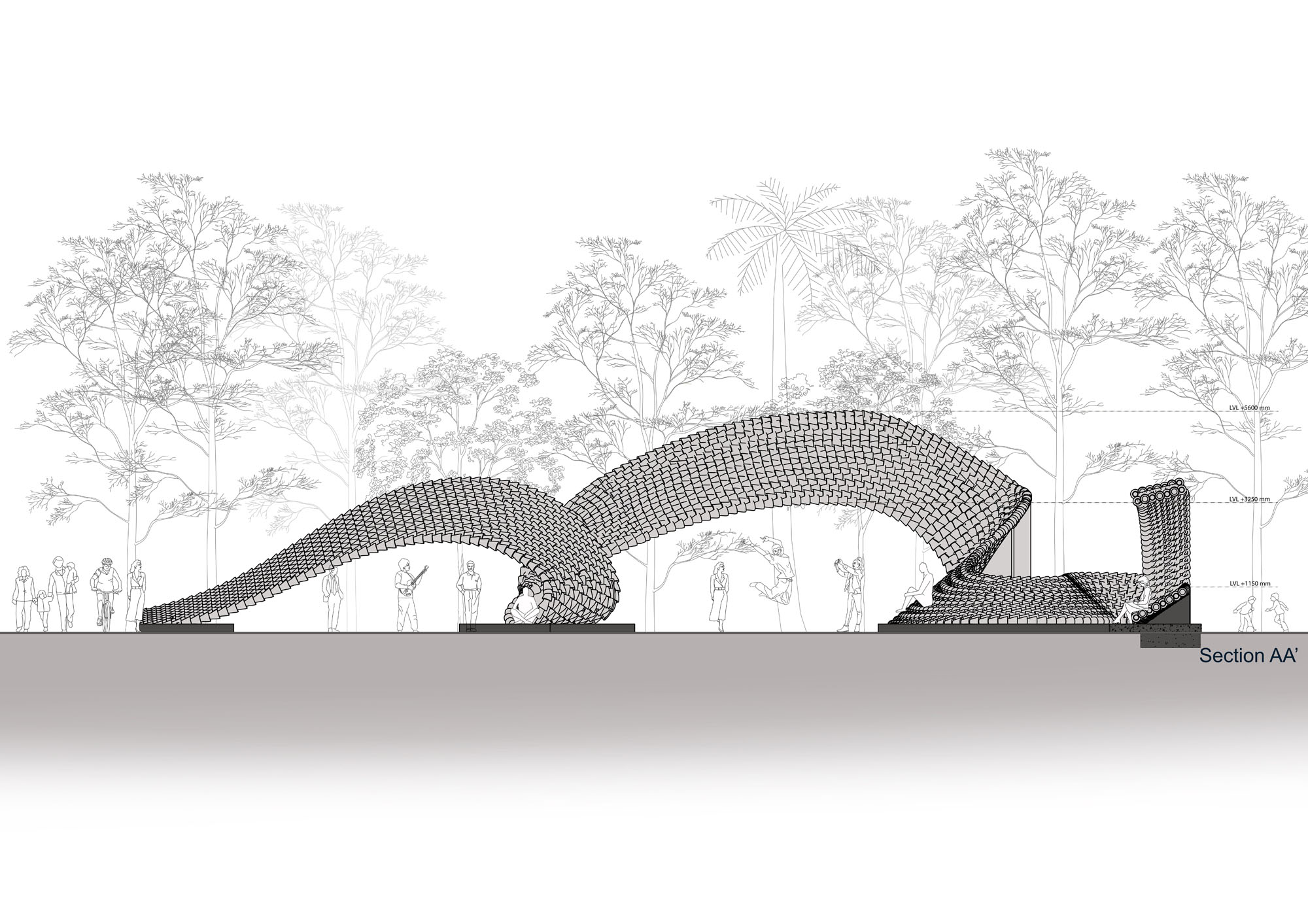
Section
以下、ウォールメーカーズのリリース(英文)です。
Project Name: Kulhad Pavilion
Office Name: WALLMAKERS
Office Website: www.wallmakers.org
Social Media Accounts: @ar.vinudaniel , @iksha.in
Contact email: vinudaniel@gmail.com, clients.wallmakers@gmail.com
Firm Location: India
Completion Year: 2025
Gross Built Area (m²/ ft²): 1025 ft²
Project Location: Miramar Beach, Goa
Program / Use / Building Function: Outdoor Pavilion
Lead Architects: Vinu Daniel, Preksha Shah
Lead Architects e-mail: vinudaniel@gmail.com
Photographer
Photo Credits: Studio Iksha
Photographer’s Website: https://studioiksha.in
Photographer’s e-mail: studioikshasmm@gmail.com
Project Description
‘Kulhads’ or ‘mud cups’ (terracotta cups) used to be a familiar sight at railway stations, used to sip hot tea or cool buttermilk (lassi) and eventually thrown away across beaches and train tracks in India. So when the opportunity arose to make a pavilion at the Miramar beach in Goa, as a part of the Serendipity Arts Festival 2025, it seemed apt to make a ‘Kulhad’ Pavilion made entirely of 18,000 ‘kulhad’s’ or terracotta cups collected from the local communities of Dharavi, Mumbai. Made entirely with ‘kulhads’ the pavilion is not only a reminder of the sheer amount of waste, but also how it can be used positively to become a shade to the many who travel to the beach. Consisting majorly of 3 compressive catenary vaults that transfer the weight of the entire superstructure to the ground, the pavilion was designed as a series of unreinforced vaults that meander across the side of the beach between the trees as seatings and stages, aiming to provide a shade to both humans and animals alike.
ウォールメーカーズ 公式サイト
https://www.wallmakers.org/