
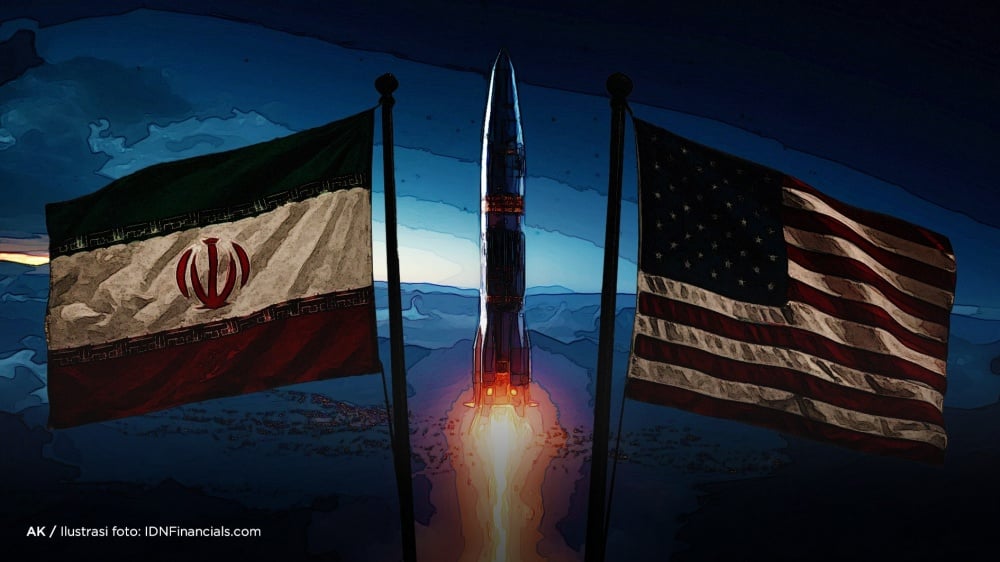
A diplomat believes that a rushed deal risks triggering further technical problems and uncertainty.
JAKARTA – Several European allies believe that the United States’ push to secure a rapid agreement with Iran risks creating new problems in already complex nuclear negotiations.
As reported by reuters, diplomats involved in the issue are concerned that Washington’s approach, which aims to quickly produce an initial deal, could leave difficult technical issues unresolved in later stages.
“The concern is not that there will be no agreement,” said a senior European diplomat. “The concern is that there will be a bad initial agreement that will create an endless chain of problems.”
The administration of Donald Trump rejected the criticism. White House spokesperson Anna Kelly said, “President Trump has a proven track record of securing strong deals on behalf of the United States and the American people, and he will only accept an agreement that puts America first.”
Diplomats from France, the United Kingdom, and Germany said they have not been heavily involved in the latest process, despite previously playing a key role in the 2015 nuclear deal, known as the Joint Comprehensive Plan of Action. That agreement was withdrawn by Trump in 2018.
The latest round of negotiations has resumed in Islamabad after around 40 days of military conflict. The main focus remains on exchanging limits on Iran’s nuclear programme for sanctions relief. However, differences in approach and low levels of trust are seen as increasing the risk of a fragile agreement.
“It took 12 years and extraordinary technical work,” said Federica Mogherini. “Does anyone really think this can be done in 21 hours?”
Diplomats say an initial agreement may only cover a basic framework with limited detail, particularly on the most sensitive nuclear issues. One key concern is around 440 kilograms of uranium enriched to 60%, which could potentially be used for several nuclear weapons if further processed.
“The Americans think you agree on three or four points in a five-page document and that’s it, but in nuclear matters every clause opens the door to a dozen other disputes,” said another European diplomat.
A number of technical options are under discussion, including reducing uranium enrichment levels domestically under the supervision of the International Atomic Energy Agency or transferring some material abroad. However, each option would require complex follow-up negotiations. “Whatever happens now is only a starting point,” said a Western diplomat. “That is why the 2015 JCPOA ran to 160 pages.”
A fundamental difference also remains over Iran’s right to enrich uranium. Washington is pushing for a complete halt, while Tehran insists on its right to a civilian programme. “Negotiations with Iran are meticulous and delicate: every word matters,” said Gérard Araud. “This is not something that can be rushed.”
On the economic side, discussions include lifting sanctions and restoring access to Iran’s frozen funds. Iran is seeking limited short-term access, while broader relief would require European support.
“These talks are not a property deal settled with a handshake,” said a senior regional diplomat. “They involve sequencing steps, lifting sanctions, and reciprocal nuclear measures.”
Diplomats believe recent geopolitical pressures have further hardened Iran’s position, including demands for non-aggression guarantees. US allies in the region also have differing interests, including concerns over ballistic missiles and Iran’s proxy activities. Although not at the forefront of negotiations, European officials say their long experience remains relevant to the process. “This US team lacks sufficient expertise,” said one European official. “We have been working on this file for two decades.” (DH/LM)
as a preferred source on Google