
© HAEAHN Architecture
© Namsun Lee
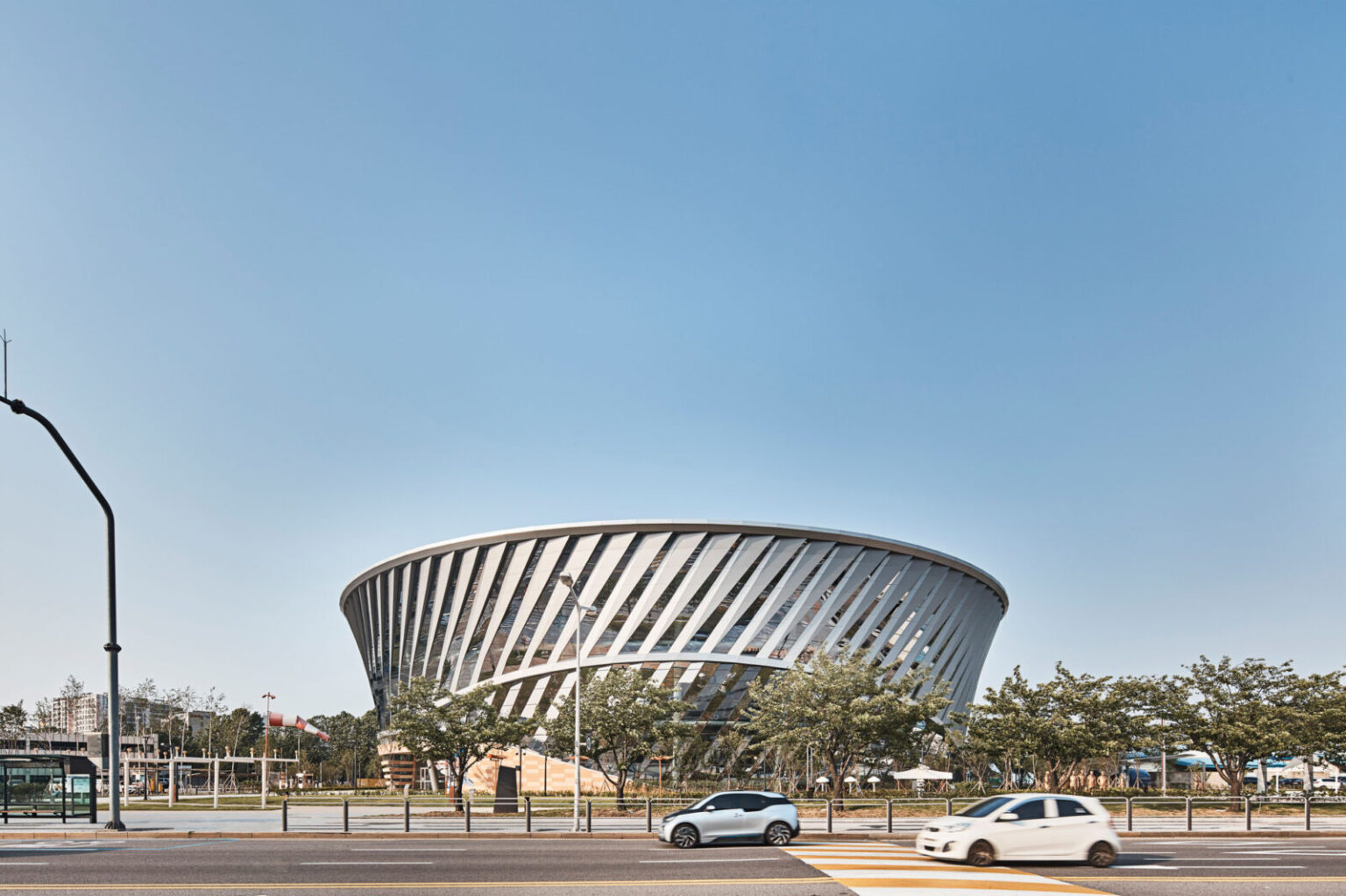
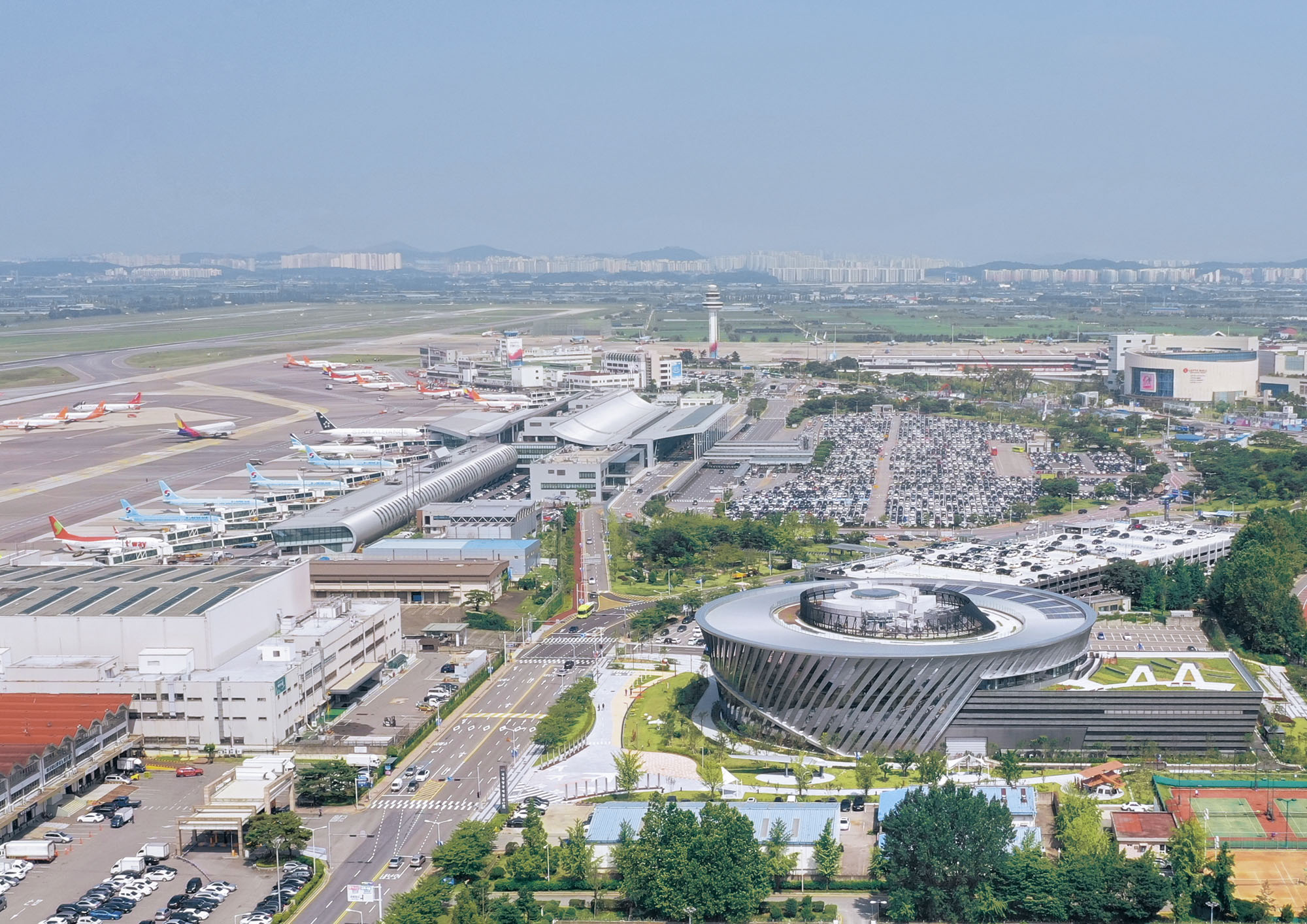
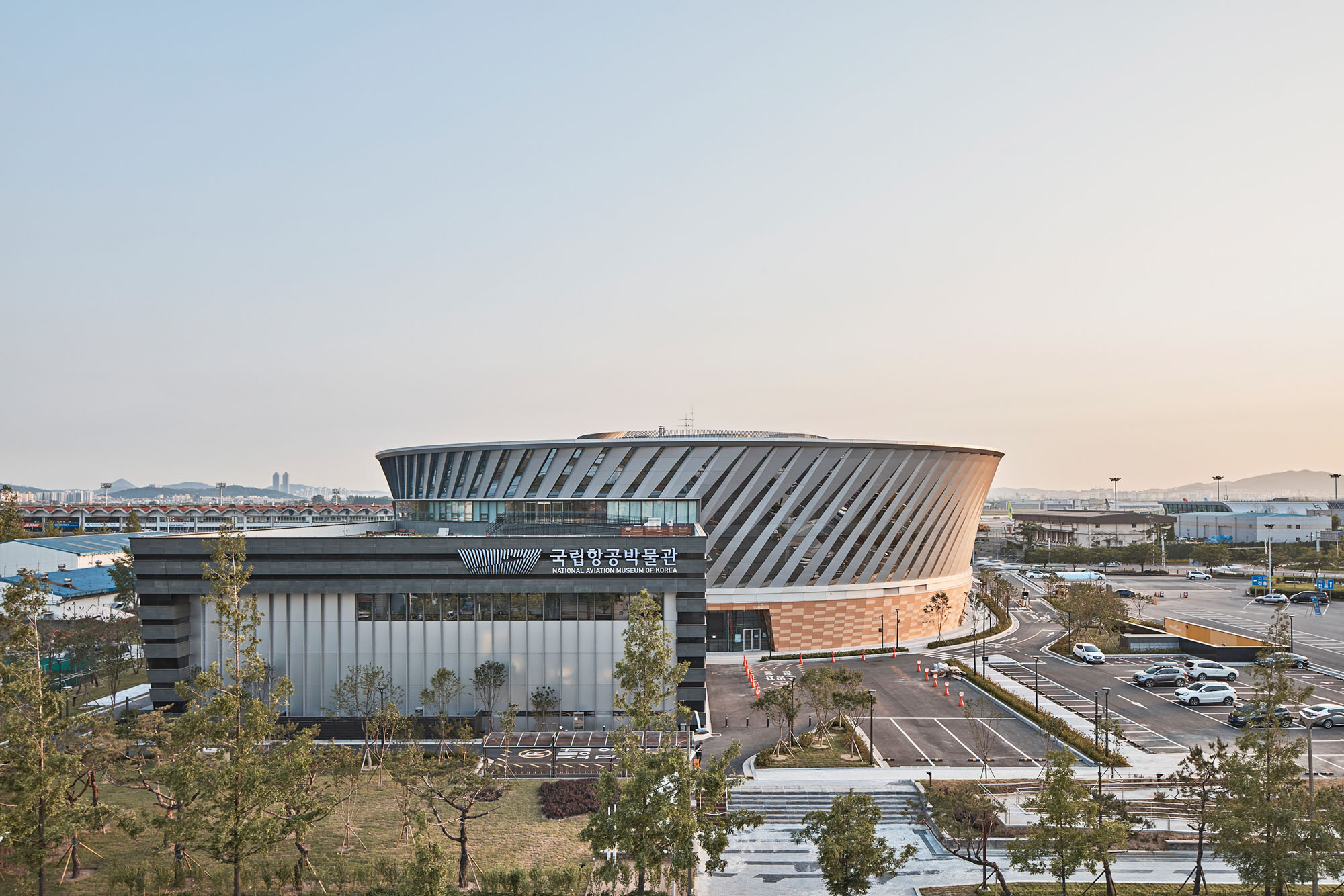
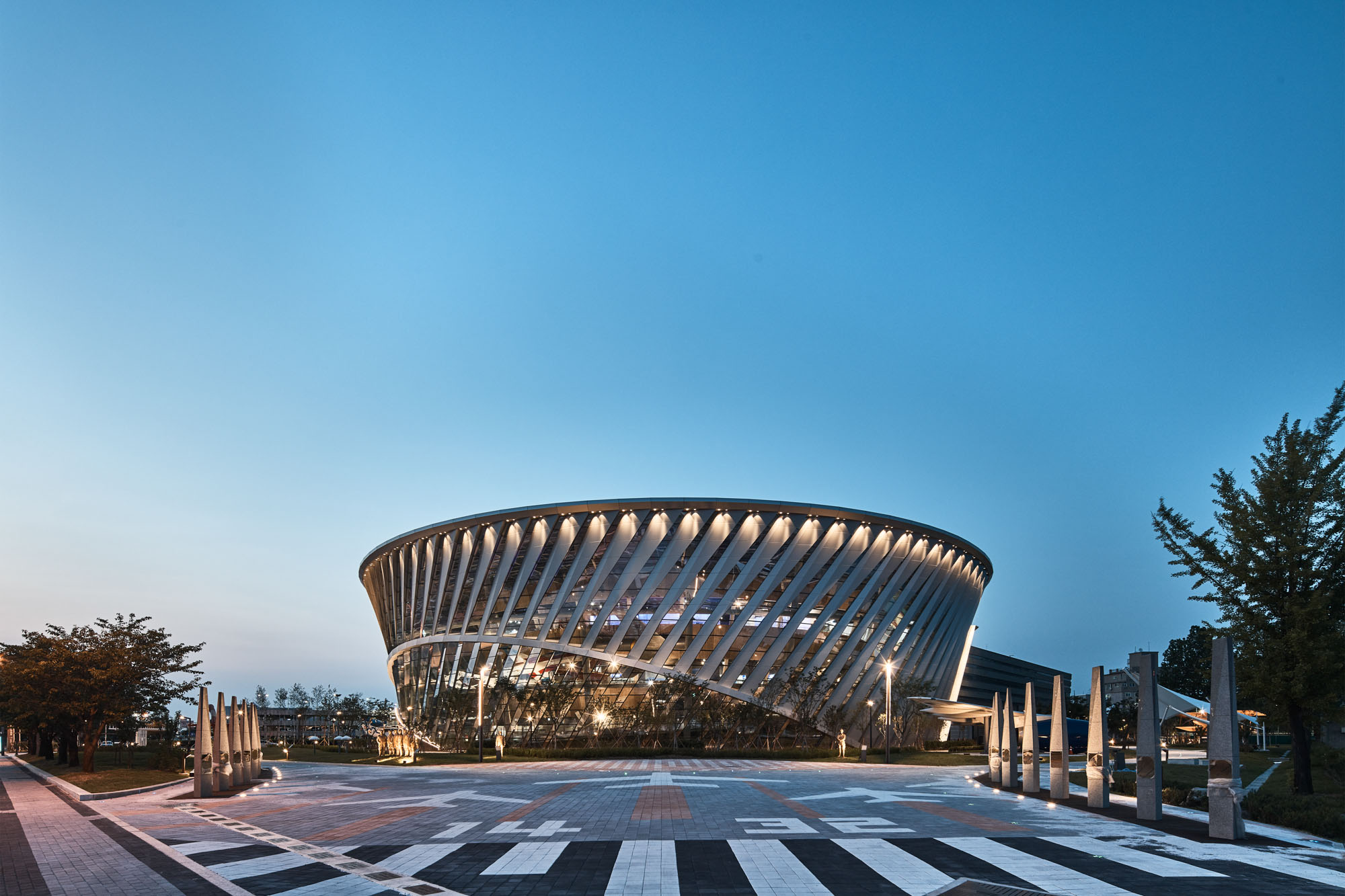
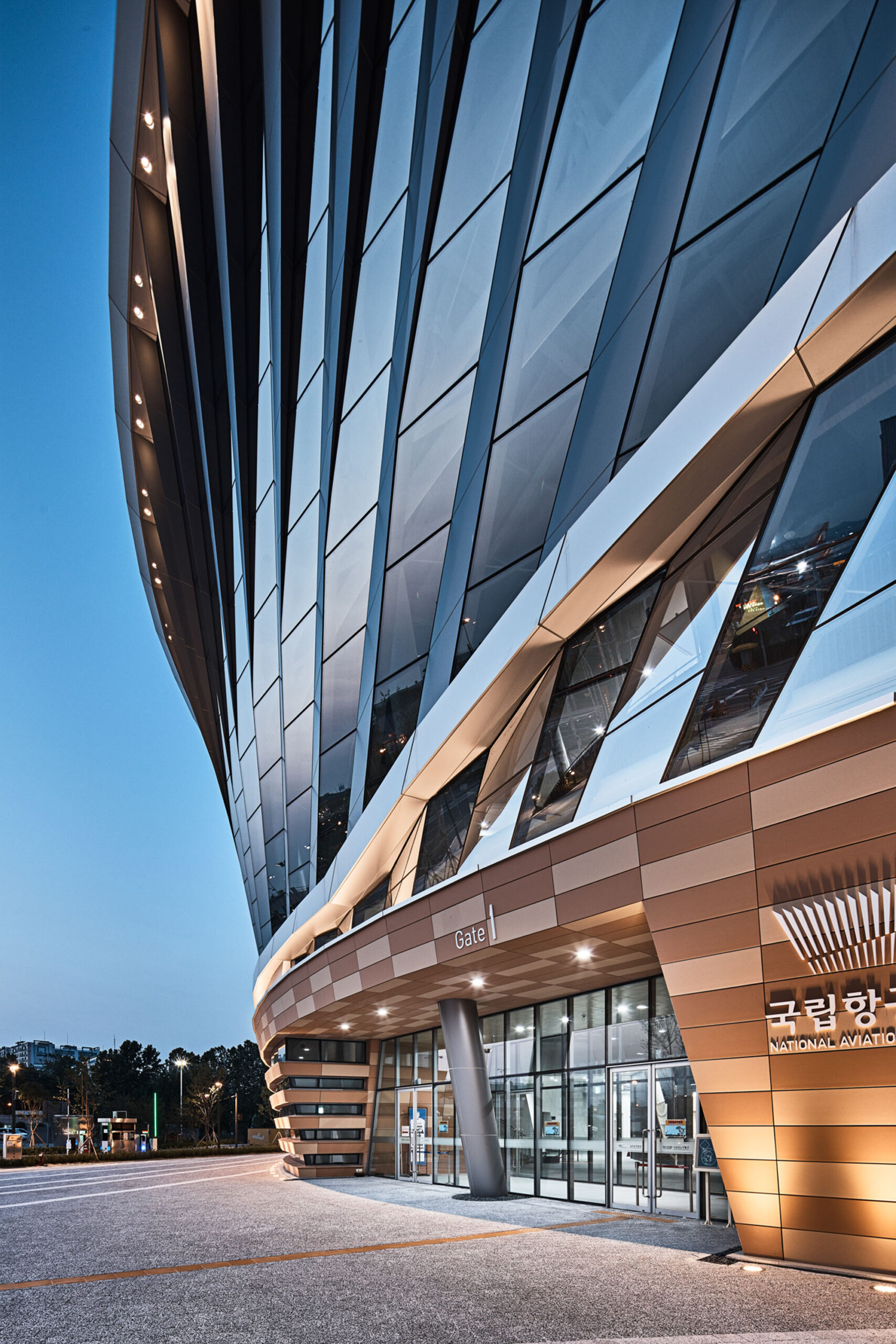
韓国・ソウルの金浦国際空港の近くに位置する〈韓国国立航空博物館(National Aviation Museum of Korea)〉は、航空産業の象徴的アイコンとして設計された、「エアタービン」をモチーフとした外観が特徴的な建築です。
韓国の設計事務所 HAEAHN Architectureが設計しました。
注目ポイント
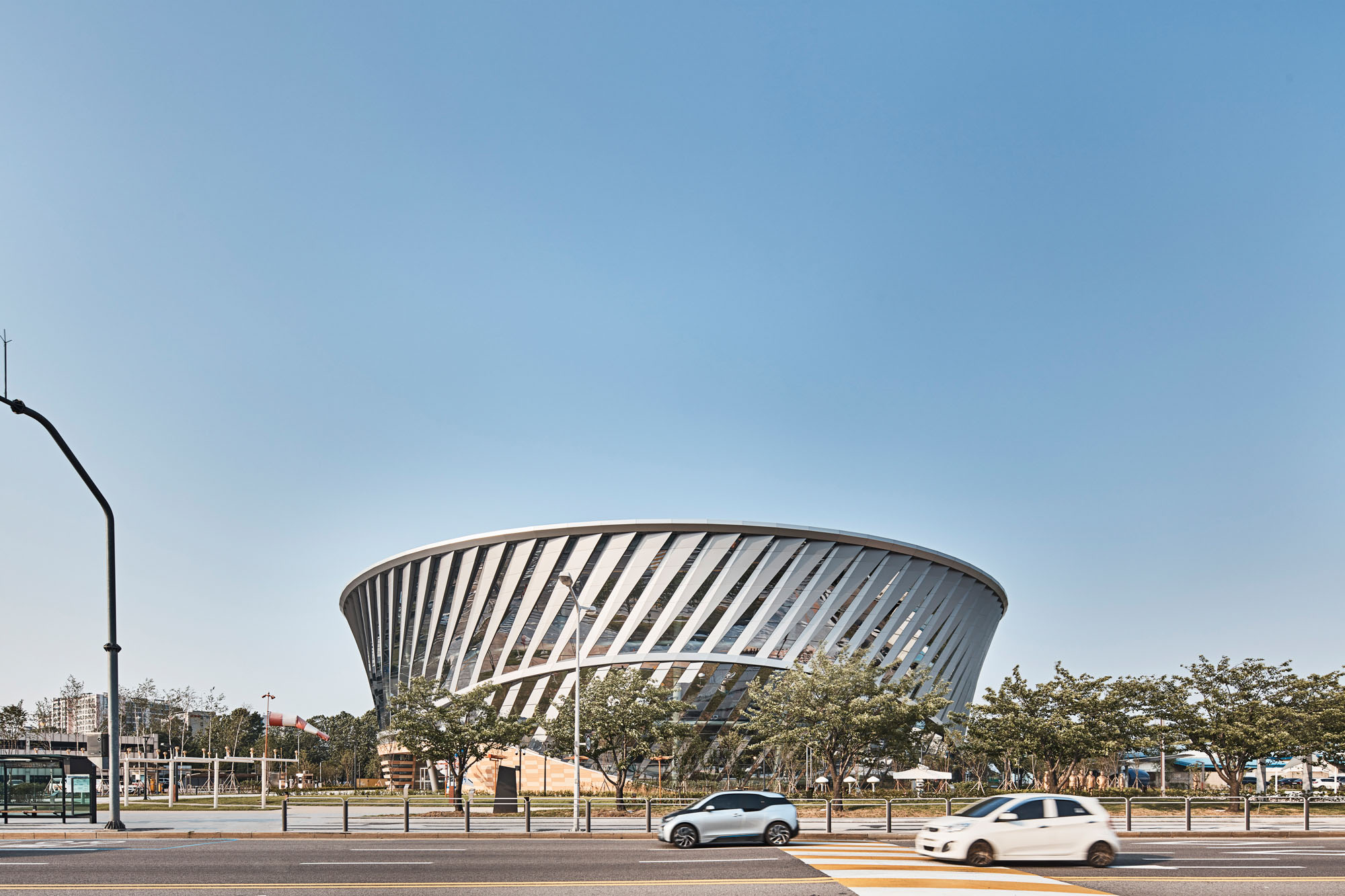
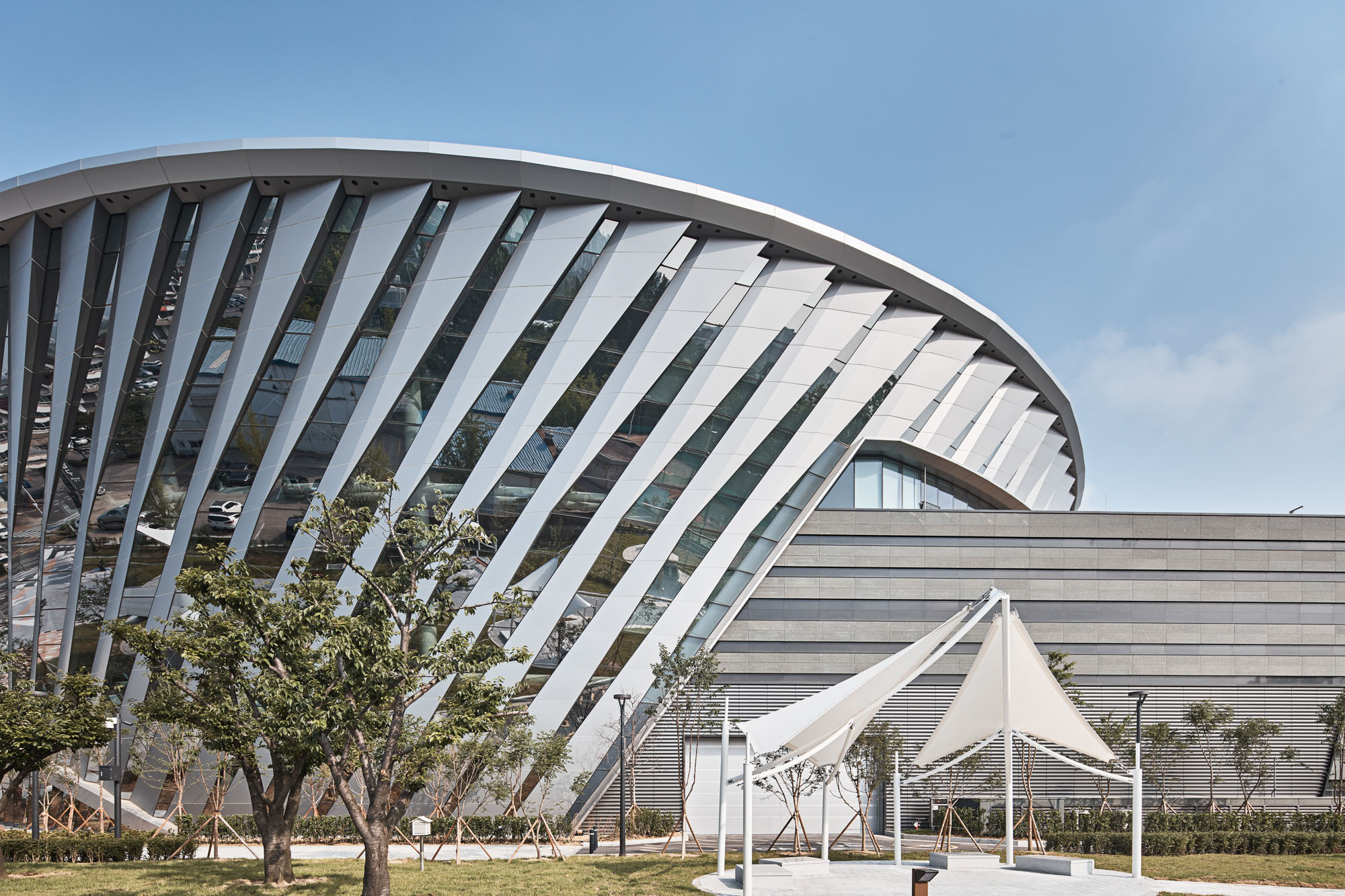
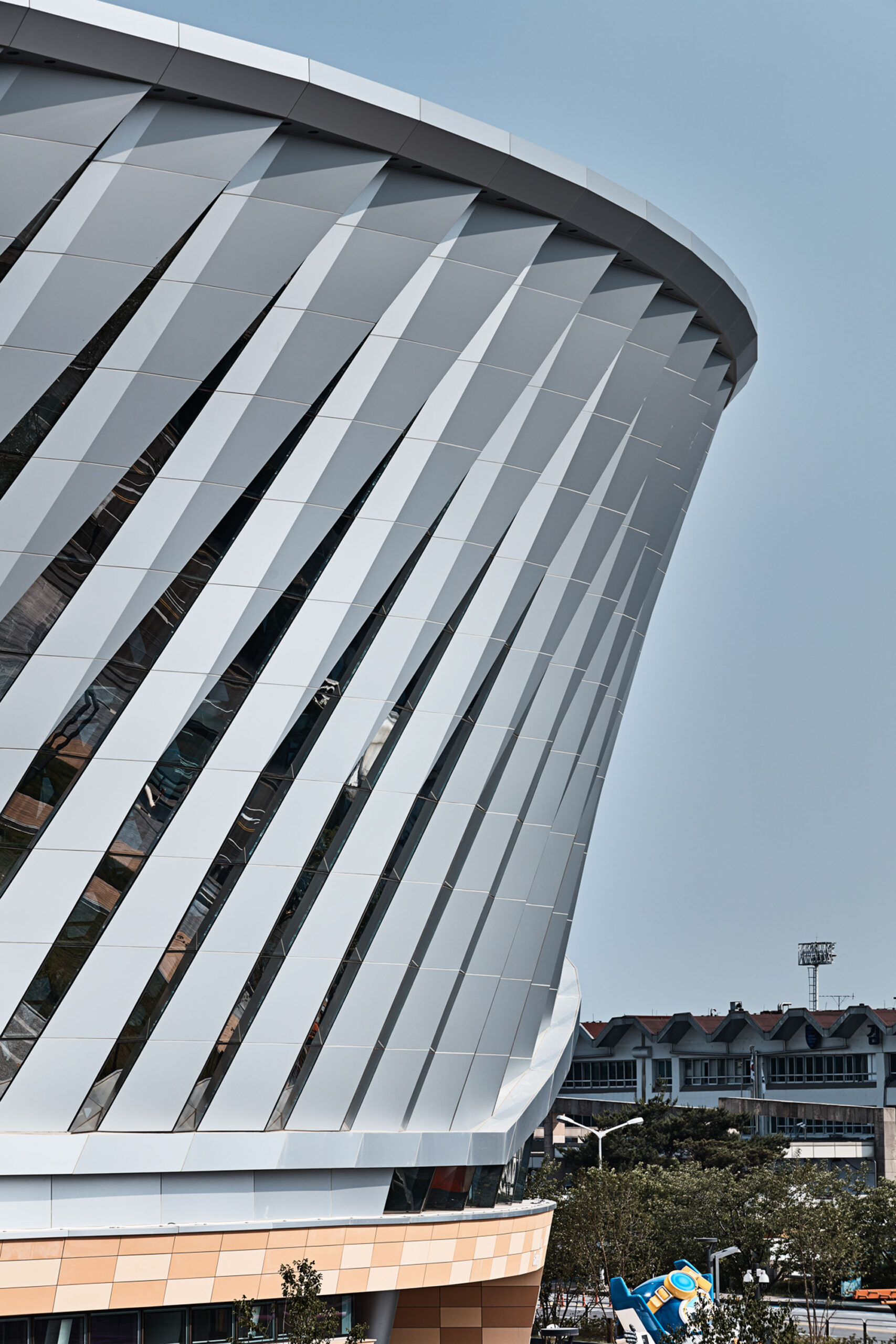
タービンを具現化したダイナミックな外殻構造
すべて方位に正面性をもたせる建築形態
展示物と建築を一体化させる立体プロムナード「エアウォーク」
(以下、HAEAHN Architectureから提供されたプレスキットのテキストの抄訳)
© Namsun Lee
© Namsun Lee
航空産業の象徴的アイコンとしての建築
金浦国際空港に位置する〈韓国国立航空博物館〉は、韓国航空産業の地位向上を目的として、国土交通部が推進する多文化空間である。航空産業を代表する教育・展示・体験学習の拠点となる新博物館を創出するため、「科学・自由・美・冒険」を表現する3つのデザインコンセプトが採用された。
© Namsun Lee
© Namsun Lee
核となる3つのデザインコンセプト
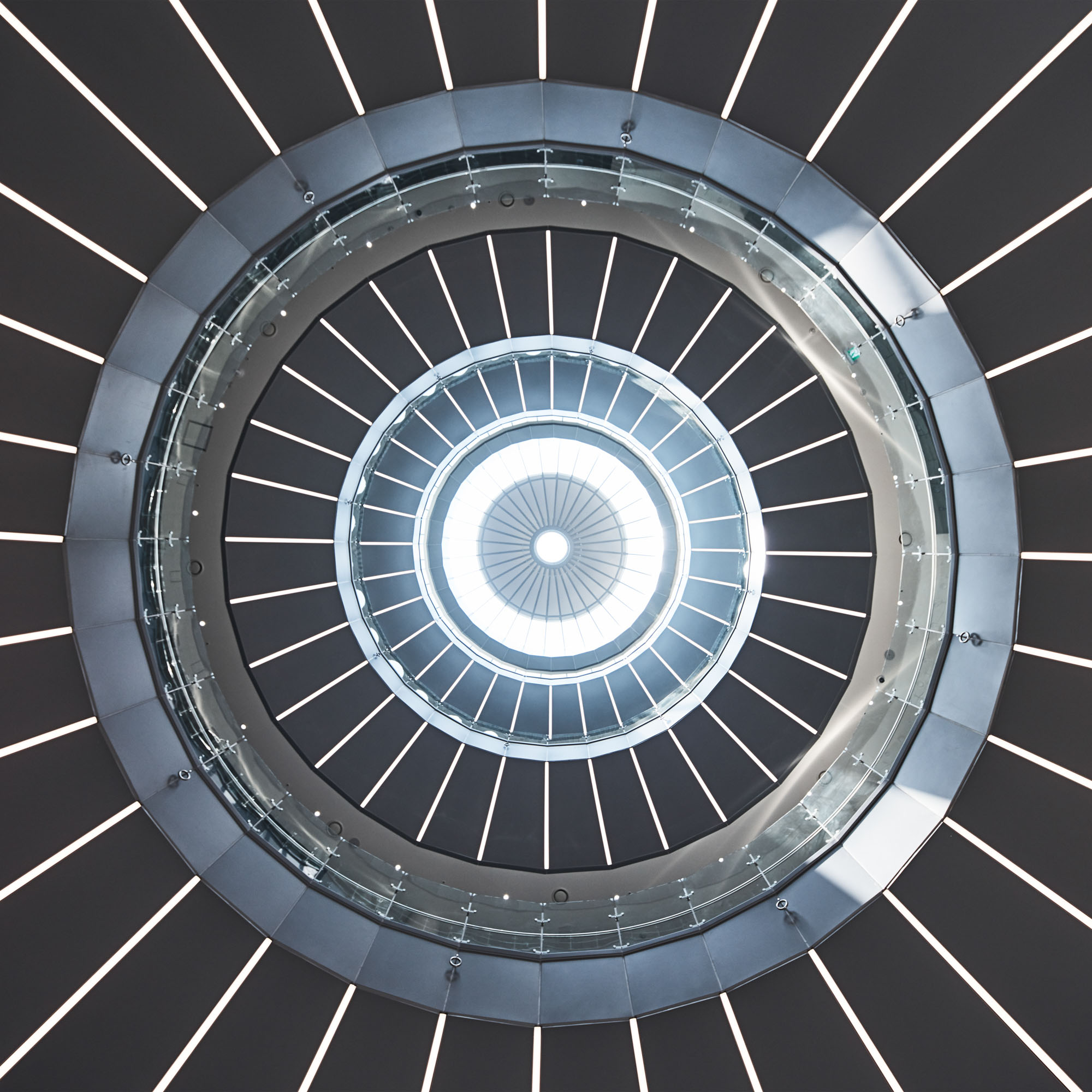
第1のコンセプト「エアタービン(Air Turbine)」は、航空機のタービンをモチーフとしている。機械美学と科学技術を統合した象徴的なアイコンとして、航空産業のランドマーク機能を果たす。
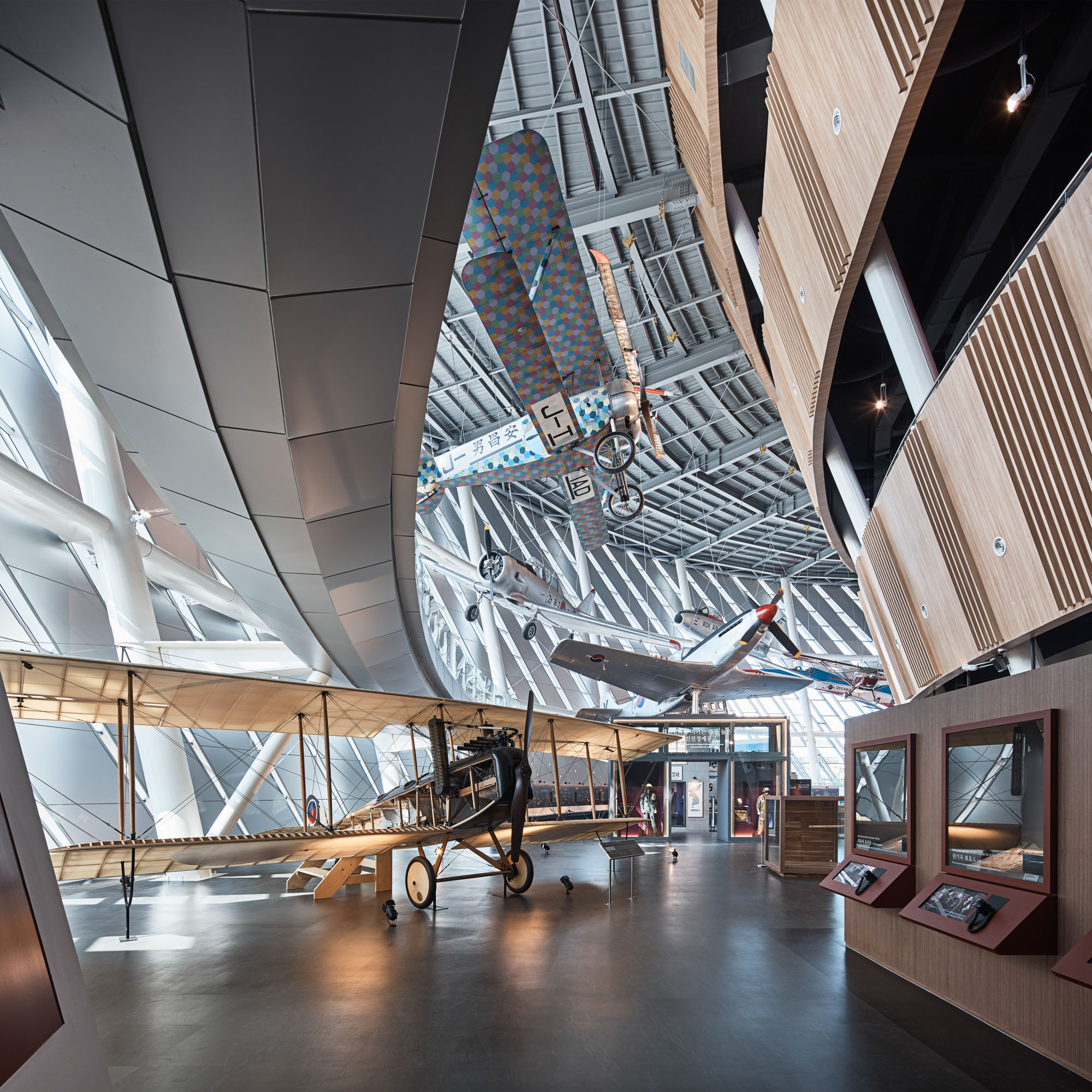
第2のコンセプト「エアショー(Air Show)」は、韓国航空の歴史がパノラマのように展開する航空ギャラリーである。ここでは飛行の自由と躍動感を伝える、新たな展示パラダイムの実現が図られた。
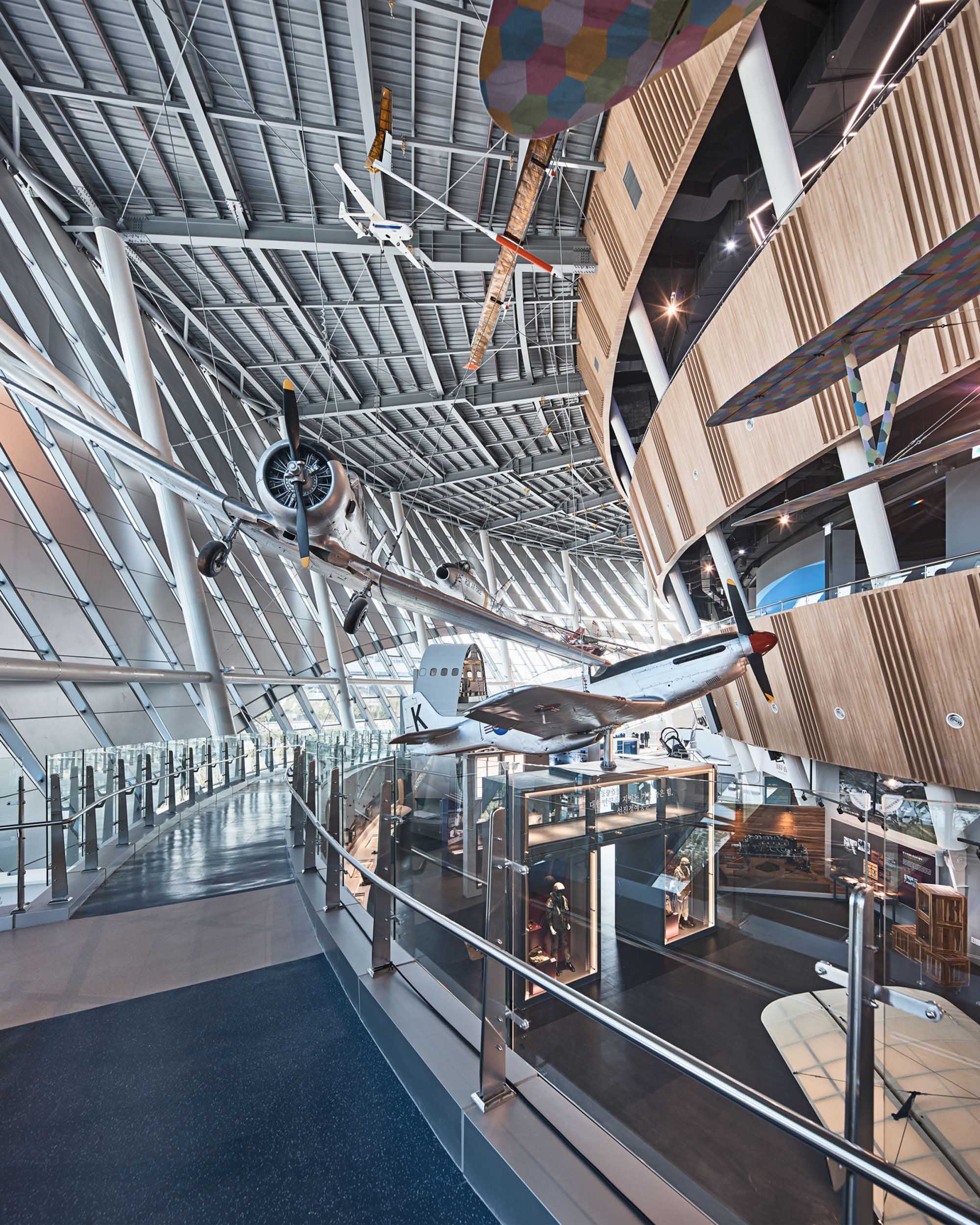
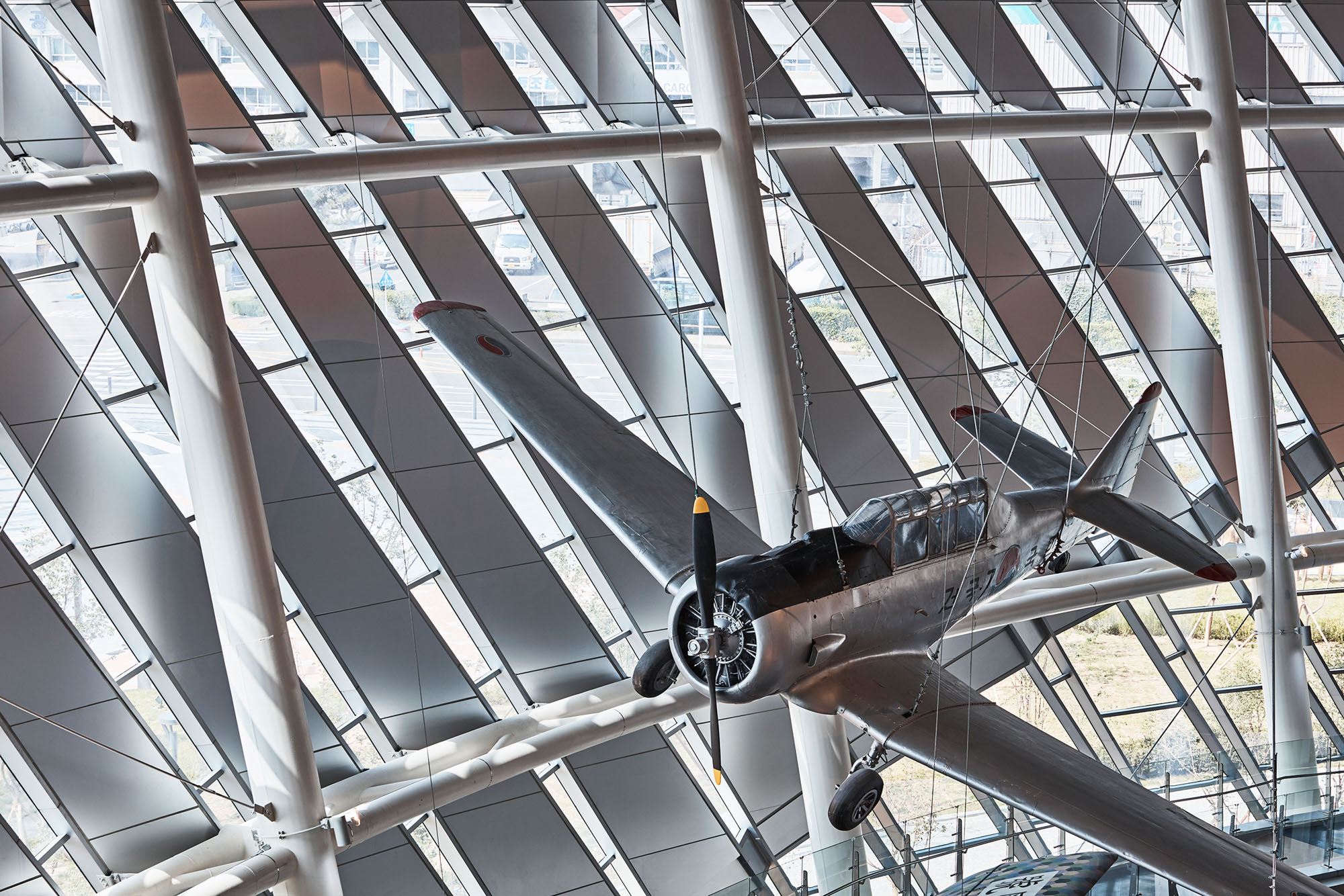
最後の要素である「エアウォーク(Air Walk)」は、さまざまな高さに配置された航空機の間を縫うように流れる立体展示プロムナードである。照明を施した建築構造の中で、よりダイナミックな空間体験を提供するよう設計されている。
© Namsun Lee
© Namsun Lee
すべての方向に正面性を与える建築形態と配置計画
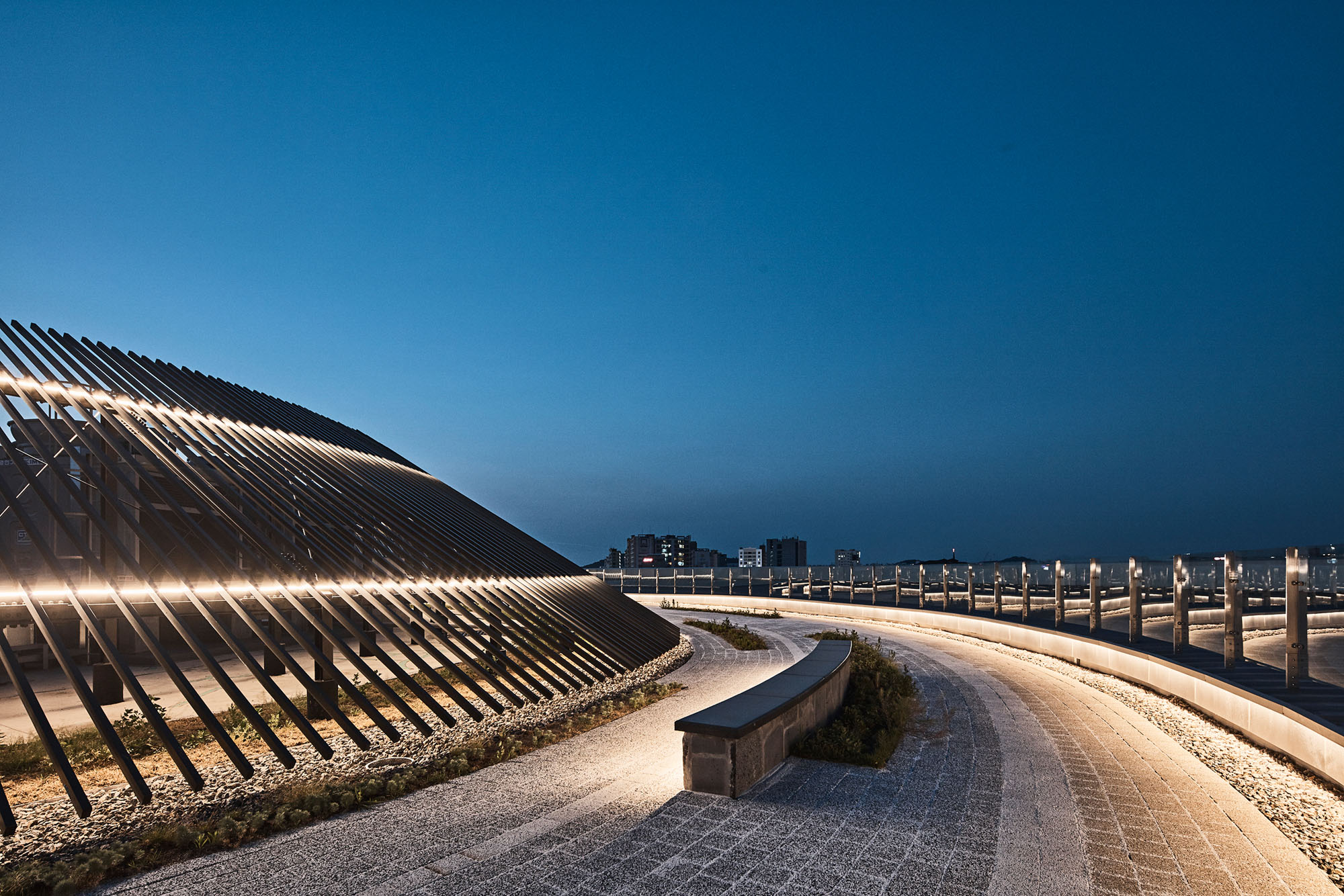
敷地は多面的な円形レイアウトで計画された。南側環状道路、支援施設、主要アクセス道路を含む全方向に対して正面性を確保しており、空港と支援施設の中間に位置する中心的な役割を担っている。
© Namsun Lee
内部空間と構造の統合
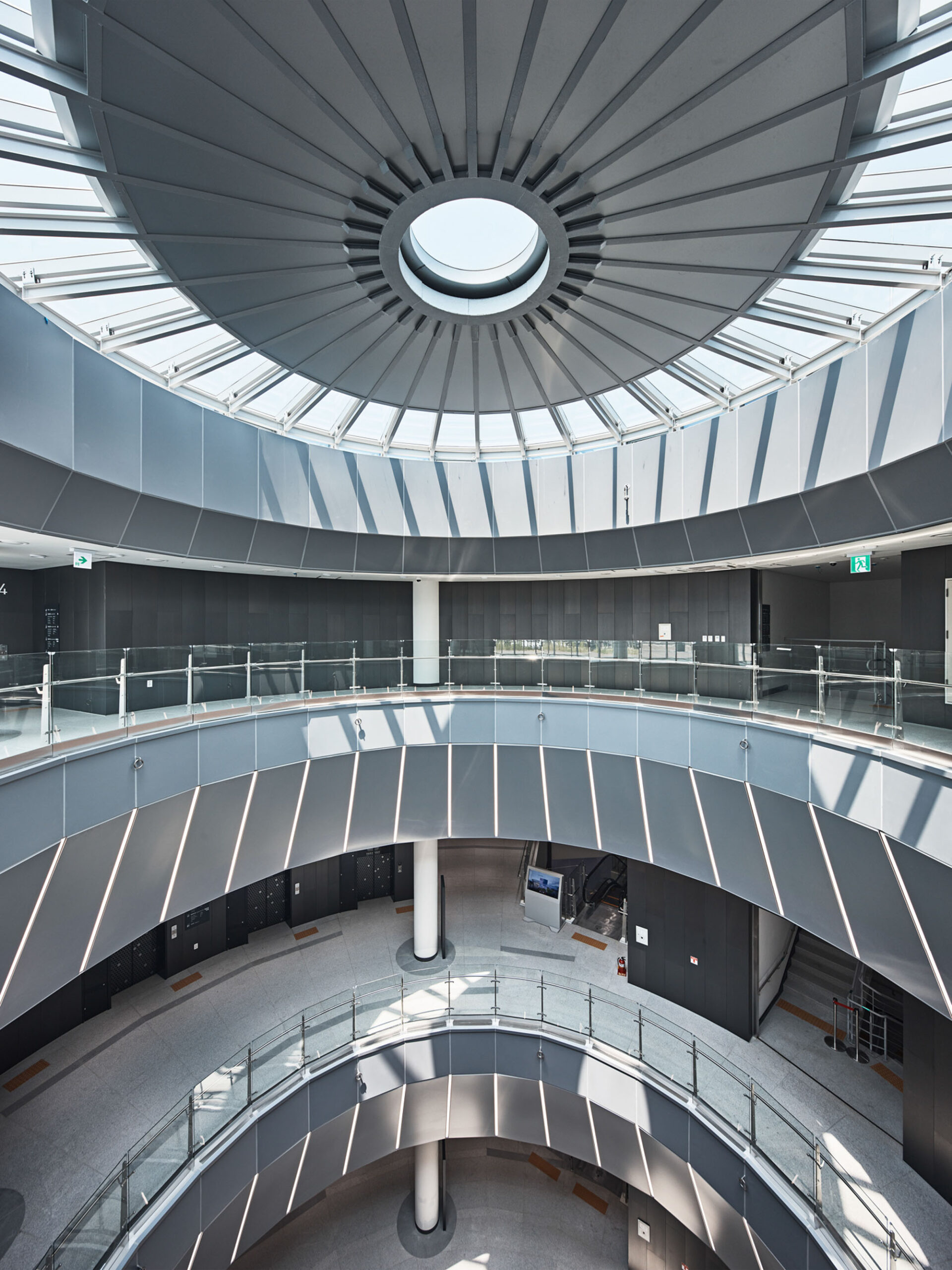
常設展示エリアでは、3層吹き抜けの空間が全体の一体性を創出している。透明なファサードは、屋外展示と屋内空間を視覚的に連結させる役割を果たす。
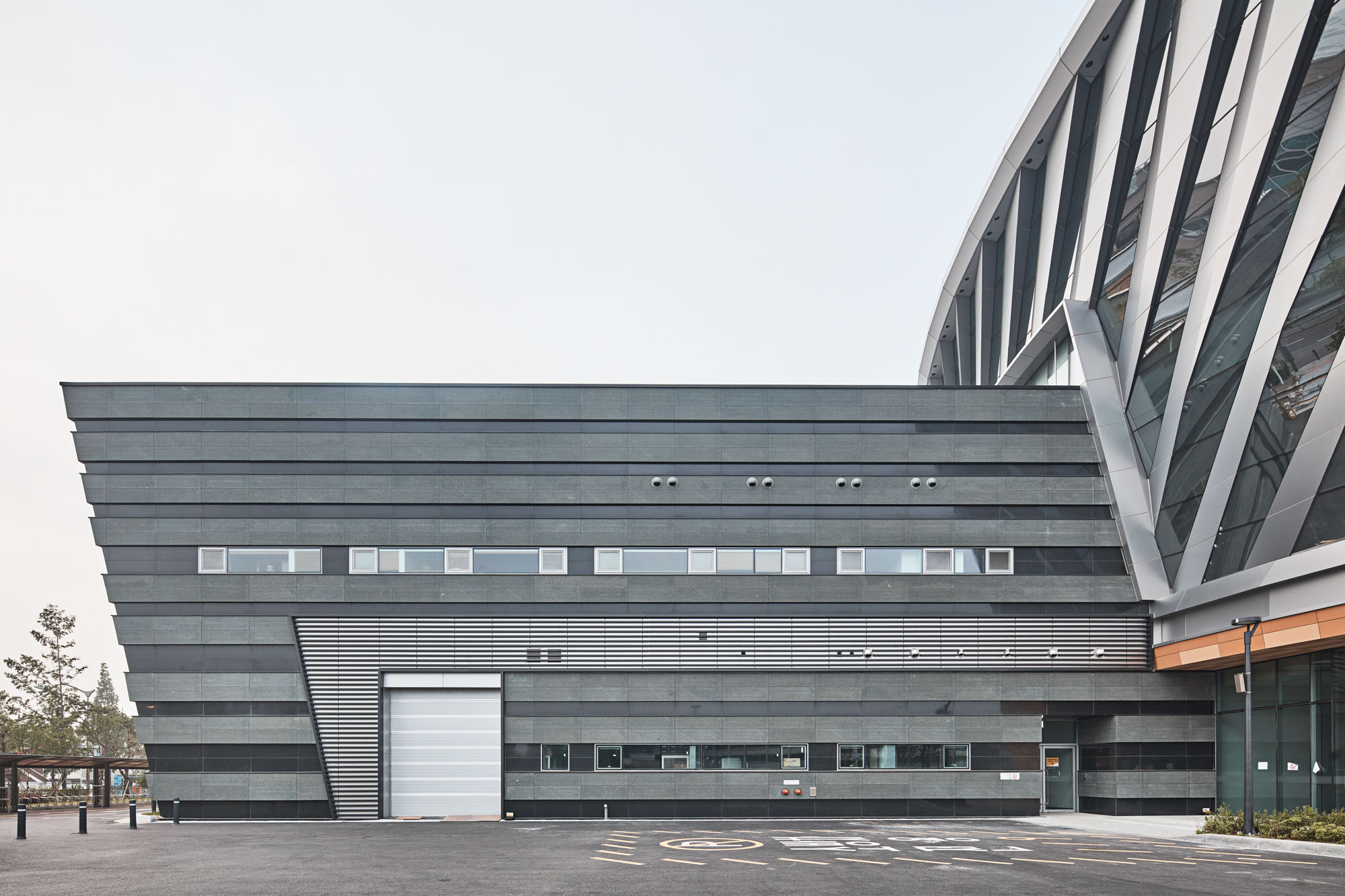
建築全体は、空の自由を想起させる「円形の展示ホール」と、収蔵・事務・設備機能を最適化した「長方形の管理棟」という、2つの異なるボリュームで構成されている。これら対照的な形状が、周囲の環境と調和しながら統合されている。
翼を模したエコフレンドリーな「エアタービン」の内部には、航空ギャラリーの起点となる螺旋状の展示空間が設けられた。層状の天井面と動的な空間の連続性により、来場者を自然に奥へと導く設計となっている。
© Namsun Lee
© Namsun Lee
© Namsun Lee
© Namsun Lee
© Namsun Lee
以下、HAEAHN Architectureのリリース(英文)です。
National Aviation Museum of Korea
[Design Firms]
HAEAHN Architecture
* Web : https://www.haeahn.com/en/index.do
[Use]
Museum
[Status]
Completed in 2020
[Architects]
– Lead Architects: Sehan Yoon, Taeman Kim, Jongyup Lim(Inha University)
– Team: Sungwon Kim, Bongju Moon, Minseok Kim, Jinwook Han, Namkoo Koo, Jungrae Kim, Bongjin Choung, Jaeho Lee, Seokjin Ji, Yongjea Choi
[Location]
Gangseo-gu, Seoul, South Korea
[Site Area]
15,000㎡
[Total Area]
18,593.50㎡
[Floor]
4F / B1
[Photography]
© Namsun Lee / Except Image No. 4 © HAEAHN Architecture
[Project Description]
The National Aviation Museum, located at Gimpo International Airport is a multicultural space promoted by the Ministry of Land, Infrastructure and Transport to elevate the status of the Korean aviation industry. To create a new museum that serves as a hub for education, exhibition, and experiential learning representing the aviation industry, three design concepts expressing science, freedom, beauty, and adventure were incorporated.
The first idea is “Air Turbine,” whose motif, is derived from an aircraft turbine, serves as a symbolic icon integrating mechanical aesthetics and scientific technology, functioning as a landmark of the aviation industry. The second concept of “Air Show,” an aviation gallery in which the history of Korean aviation unfolds like a panorama, was conceived to realize a new exhibition paradigm that conveys the freedom and dynamism of flight. The last element “Air Walk,” a three-dimensional exhibition promenade flowing through planes at various heights, was designed to provide a more dynamic spatial experience amid the illuminated architectural structure.
The site is planned with a multifaceted circular layout that presents frontality in all directions, including the southern beltway, the support complex, and the main access road, and is centrally positioned between the airport and the support complex. In the permanent exhibition area, a three-story void creates an integrated space that allows outdoor exhibitions to visually connect with the interior through a transparent façade. Two distinct volumes—a circular exhibition hall tailored to evoke the freedom of aviation in the sky, and a rectangular management building optimized for functions such as storage, offices, and facilities—are harmoniously integrated with the surrounding environment. The interior of the eco-friendly, wing-shaped Air Turbine features a spiral exhibition space that initiates the aviation gallery and naturally guides visitors through layered ceiling planes and dynamic spatial sequences.
HAEAHN Architecture 公式サイト
https://www.haeahn.com/en/index.do